You will not be the one calculating your home’s heating load, but you will live with the result every winter. A contractor who sizes a furnace properly works out how much heat your Dallas home loses on a cold night, then picks a furnace whose output matches that number. A contractor who skips that step ends up copying the old furnace’s size or guessing from square footage.
That is why the sizing method is worth understanding before you sign. A furnace that is too big heats in short bursts and leaves rooms uneven. One that is too small runs nonstop when a cold front pushes through Dallas. Neither problem shows up on installation day, so the quote is your one chance to ask how the size was chosen.
Here is how proper furnace sizing works, the shortcuts to watch for, and the questions that show whether your contractor did the math.
What Determines the Right Furnace Size for a Dallas Home?

The correct furnace size depends on how much heat your home loses during winter conditions, not how many square feet it contains. A proper evaluation considers insulation, windows, doors, ceiling height, construction, air leakage, and the home’s overall layout to determine how much heating capacity the home needs.
For example, a well-insulated 2,000-square-foot home with modern windows can have a much lower heating load than an older 2,000-square-foot home with leaky windows, limited insulation, and poorly sealed ductwork. The furnace also has to work with the home’s existing distribution system.
Important factors include:
- Home Size: Square footage establishes the basic amount of space requiring conditioned air.
- Insulation Levels: Attic and wall insulation affect how quickly heated air escapes.
- Window Area: Older or larger windows can increase heat loss during winter.
- Air Leakage: Gaps around doors and windows allow conditioned air to escape.
- Duct Condition: Leaky or undersized ducts can reduce delivered heating capacity.
- Room Layout: Open areas and closed rooms can have different heating requirements.
- Outdoor Conditions: Dallas winter design conditions influence the required heating capacity.
What Is a Manual J Load Calculation, and Why Does It Matter for Your Furnace?
Manual J is the method published by the Air Conditioning Contractors of America (ACCA) for working out how much heat a specific home loses in winter and gains in summer. The contractor enters the walls, windows, insulation, ceiling heights, and air leakage, often room by room, and the result is a heating load in BTUs per hour.
It matters because it turns furnace sizing into a number you can check. A quote built on a Manual J can show your home’s heating load and how the chosen furnace’s output lines up with it. A quote built on square footage or the old furnace’s label has nothing to show.
| What a Manual J Gives You | How It Helps You |
|---|---|
| Whole-Home Heating Load | A BTU figure you can compare to the furnace’s output on the spec sheet |
| Room-by-Room Loads | Explains why one bedroom stays colder than the rest of the house |
| Cooling Load | Confirms the furnace blower can move the airflow your AC needs |
| Design Conditions Used | Shows the calculation was run for Dallas winters, not a generic chart |
Manual J gives you the number. Choosing a furnace whose output matches it (ACCA’s Manual S) and confirming the ducts can carry the airflow (ACCA’s Manual D) are the steps that follow.
What Happens If a Furnace Is Too Large or Too Small?
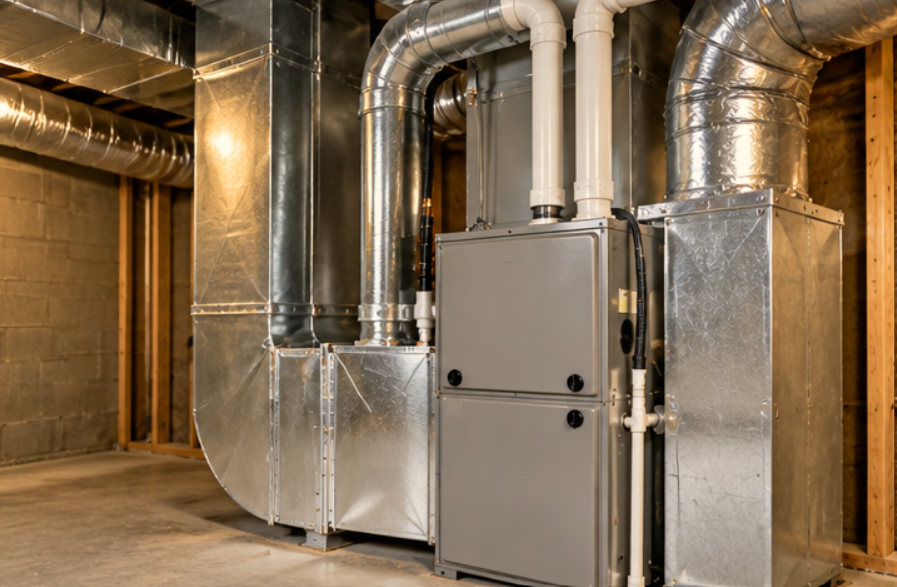
Furnace sizing affects more than whether your Dallas home eventually reaches the thermostat setting. An oversized or undersized system can change how often the furnace runs, how evenly rooms are heated, and how comfortably the system operates during colder weather.
When Is a Furnace Too Large?
An oversized furnace can raise the indoor temperature quickly and shut off before completing a longer heating cycle. The system then starts again when the temperature drops, creating frequent on-and-off cycles that can contribute to uneven comfort and unnecessary equipment cycling.
What Happens With an Undersized Furnace?
An undersized furnace may need to run for extended periods while still struggling to maintain the thermostat setting during colder conditions. Longer operation is not automatically a problem, but consistently failing to satisfy the heating demand indicates that the equipment may not provide enough output for the home.
What Does Proper Sizing Look Like?
A properly sized furnace is selected around the home’s calculated heating load and installed with compatible ductwork and controls. The goal is not to install the biggest furnace possible, but to provide enough heating capacity for the home while allowing the system to operate as intended.
Getting that balance right starts before the equipment is ordered. If you are replacing an aging system, Dallas furnace installation from Proactive Air Conditioning starts with a load calculation for your home, not a copy of the old unit’s size.
What Sizing Shortcuts Should Dallas Homeowners Watch For?
Sizing mistakes tend to come from three shortcuts, and each one is easy to spot in a quote once you know to look for it.
- Copying the Old Furnace: The old unit may have been oversized from day one, and new windows, added attic insulation, or sealed ducts can lower the heating load after it goes in.
- Square-Footage Rules of Thumb: A BTU-per-square-foot estimate skips insulation, windows, and air leakage, which is where two same-size homes differ most.
- Upsizing “To Be Safe”: A bigger furnace does not make a Dallas home warmer. It cycles more, and it costs more to buy.
A contractor who ran the numbers can show them to you. If a quote cannot explain why that furnace fits your home, that is the question to ask before you sign.
How Should a Contractor Match Furnace Output to Your Home’s Heating Load?
After determining the home’s heating load, the next step is matching that requirement to the furnace’s output capacity. Homeowners often see a furnace advertised by its BTU input, but input capacity does not represent the exact amount of heat delivered into the home.
A furnace’s efficiency rating also affects its usable output. Take two furnaces with the same 80,000 BTU input. Using AFUE as a rough guide, the 80% model puts about 64,000 BTUs of heat into the house, while the 96% model puts in about 76,800. That is why contractors should compare the manufacturer’s published output specifications rather than choosing equipment based solely on the largest BTU number.
When reviewing a furnace proposal, look for:
- Input Capacity: Shows the amount of fuel energy the furnace is designed to consume.
- Output Capacity: Shows the approximate heat delivered into the home.
- AFUE Rating: Indicates how efficiently the furnace converts fuel into usable heat.
- Model Number: Allows homeowners to verify the equipment’s exact specifications.
- Airflow Requirements: Shows whether the blower and ductwork can support operation.
- Control Compatibility: Confirms the furnace works with the proposed thermostat system.
In a Dallas home with a gas furnace and central AC, the furnace blower moves the air for both systems. That means the furnace also has to match your AC’s airflow, and in Dallas the AC carries the longer season. A contractor should be able to explain how the chosen model fits both sides, not only the heating load.
Can Your Existing Ductwork Handle the New Furnace?
Correct furnace sizing does not guarantee good performance if the duct system cannot move the required amount of air. Undersized supply ducts, restricted returns, excessive static pressure, leaks, and poor distribution can prevent a properly sized furnace from delivering its intended heating capacity.
This is particularly important when replacing an older furnace with newer equipment. Modern furnaces may have different airflow requirements and blower characteristics than the equipment they replace. Connecting new equipment to an unsuitable duct system can create comfort and performance problems.
Before installation, the duct system should be evaluated for:
- Supply Sizing: Confirms supply ducts can deliver the required conditioned airflow.
- Return Capacity: Ensures enough air can return to the furnace properly.
- Static Pressure: Identifies excessive resistance that can restrict system airflow.
- Duct Leakage: Finds losses that reduce the amount of heated air reaching rooms.
- Filter Resistance: Checks whether filtration is unnecessarily restricting airflow.
- Room Distribution: Determines whether conditioned air reaches living spaces evenly.
A properly sized furnace paired with poorly performing ductwork can still leave you with cold rooms. If one room stays colder after the new furnace goes in, air balancing adjusts how much air each room receives.
What Should a Dallas Furnace Quote Show About Sizing?
A furnace proposal should explain why that particular equipment was selected and what will be done during installation. Rather than comparing contractors only by price, ask each company for the information needed to understand the sizing process, equipment specifications, ductwork evaluation, and installation scope.
Dallas homes vary considerably in age, insulation, construction, and duct design. A newer, well-insulated home may need less heat than an older property with air leakage or poorly performing ductwork. The furnace should be selected around those conditions rather than using a standard equipment size.
Before approving a furnace installation, ask:
- Load Calculation: Was a Manual J heating load calculation performed for my home?
- Furnace Output: What is the selected furnace’s output capacity in BTUs?
- Duct Evaluation: Was the existing supply and return ductwork inspected?
- Airflow Testing: Will airflow and static pressure be checked during installation?
- Efficiency Rating: What AFUE rating does the proposed furnace provide?
- Installation Scope: Are venting, electrical, gas connections, controls, and testing included?
- Safety Testing: Will the completed system be checked for proper and safe operation?
Once the size is settled, the furnace installation process moves on to removing the old unit, installing the new one, and testing it.
Why Choose Proactive Air Conditioning for Furnace Sizing in Dallas?
Proactive Air Conditioning runs a Manual J load calculation before recommending a furnace, so the size on your quote comes from your house, not from the old unit’s label or a square-footage chart. With 15+ years of Dallas HVAC experience and NATE-certified technicians, we measure insulation, square footage, and ductwork before a furnace is chosen.
That is the service versus sales approach our customers describe, or as Bobby Fletcher put it in a review, “No nonsense and no inflated pricing.” If a smaller furnace fits your home, a bigger one only adds cost.
If your furnace is near the end of its life, plan your furnace replacement with a load calculation behind it. If it may still have a few winters left, book Dallas furnace repair first and get a straight answer on whether fixing it makes more sense. You can also call (469) 921-1136.
Furnace Sizing FAQs for Dallas Homeowners
How do I know if my current furnace is too large for my Dallas home?
Frequent short cycles can be one sign of an oversized furnace, especially when the home reaches the thermostat setting quickly and the system repeatedly starts and stops. However, cycling can have other causes, so a professional evaluation should consider equipment capacity, thermostat operation, airflow, and the home’s heating requirements.
Should my new furnace be the same size as my old one in Dallas?
Not automatically. The old furnace may have been oversized when it went in, and upgrades since then, such as new windows or added attic insulation, can lower your home’s heating load. A new Manual J shows whether the same size still fits or whether a smaller furnace would do the job.
Can a larger furnace heat my Dallas home more efficiently?
Not necessarily. A larger furnace can reach the thermostat setting quickly and cycle more frequently, which may affect comfort and equipment operation. The objective is to match the furnace’s output capacity to the home’s calculated heating load, not to add extra capacity for its own sake.
Should ductwork be inspected when replacing an existing furnace?
Yes. The furnace and duct system need to work together to deliver the required airflow. Supply and return sizing, duct leakage, static pressure, filter resistance, and overall distribution can all affect how well the new furnace performs. Replacing the equipment without considering these factors can leave existing comfort problems unresolved.
Can I check my contractor’s furnace sizing myself?
You can check that it was done. Ask for the heating load from the Manual J and the furnace’s output capacity from the manufacturer’s spec sheet. The two numbers should line up, and the contractor should be able to explain any gap between them.