Dallas homeowners replacing a heating system may wonder whether a standard heat pump can handle the area’s occasional hard freezes. The concern is reasonable: a heat pump’s heating capacity changes as outdoor temperatures fall, and the system may rely more heavily on auxiliary heat during the coldest hours.
But that does not automatically mean every Dallas home needs a cold-climate heat pump. For many homes, a standard heat pump that is sized right and paired with well-set backup heat handles a Dallas winter just fine. The better question is whether your home’s heat loss, the equipment’s low-temperature capacity, and your backup strategy justify paying more for cold-weather performance.
This guide covers central, ducted heat pumps: when a standard model makes sense, when cold-climate equipment is worth considering, how backup heat affects the decision, and which numbers you should compare before choosing a system.
Can a Standard Heat Pump Handle a Dallas Winter?
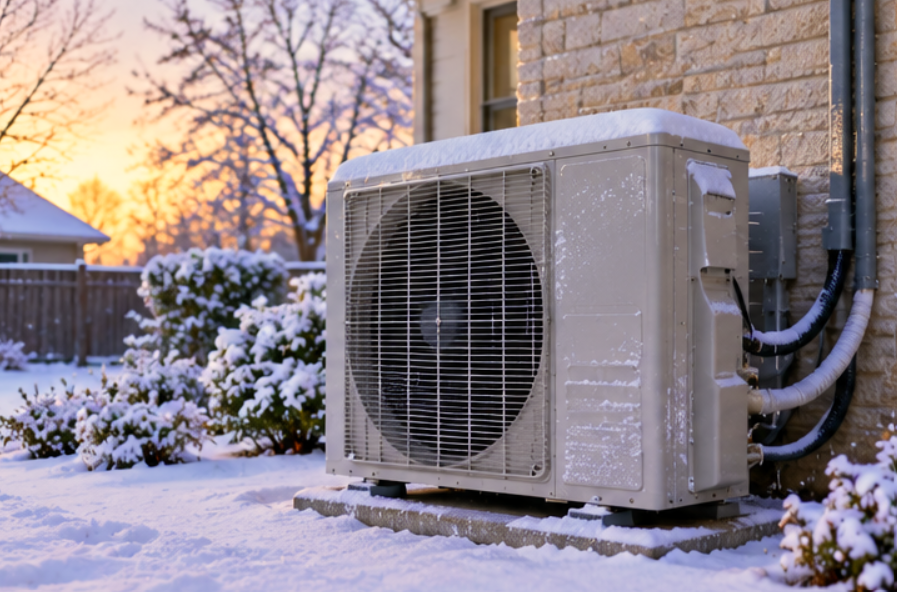
Yes, in many Dallas homes. Heat pumps do not suddenly stop producing heat when outdoor temperatures fall below freezing. Instead, their heating capacity gradually decreases as the outdoor air gets colder, which means the system may need to run longer or bring on supplemental heat during the coldest periods.
The useful distinction is between everyday winter performance and extreme-weather capacity. Even the February 2021 freeze, when Dallas hit −2°F and stayed below freezing for 139 straight hours, was the second-coldest reading on record. Most Dallas winters never come near that, so a heat pump can run efficiently for months and lean on backup heat for a night or two without anything being wrong.
If you are still deciding between the two, start with how a heat pump and a furnace compare in Dallas winters. If you already own a heat pump, a heat pump tune-up before the first cold front checks that the defrost cycle and backup heat both work when you need them.
Before choosing equipment, look at how the heat pump performs at the temperatures Dallas homeowners worry about:
| What to Compare | Why It Matters |
|---|---|
| 47°F heating capacity | Shows performance in relatively mild conditions |
| 17°F heating capacity | Shows how output changes during a hard freeze |
| 5°F heating capacity | Useful for evaluating extreme cold performance |
| Balance point | Shows when the heat pump needs supplemental heat |
| Backup capacity | Determines how the home handles the remaining heating load |
For many homes, the question is not whether the heat pump can operate during a freeze. It is whether the system can provide enough capacity to keep the home comfortable without relying excessively on backup heat.
What Is a Cold-Climate Heat Pump, and How Is It Different?
A cold-climate heat pump is an air-source heat pump built to keep producing most of its heat in freezing weather. The clearest test is the ENERGY STAR Cold Climate label: to earn it, a heat pump must still deliver at least 70% of its 47°F heating capacity at 5°F, and still put out at least 1.75 units of heat for every unit of electricity it uses.
A standard heat pump loses more of its output as the weather gets colder, so it leans on backup heat sooner. Cold-climate models hold on longer, mostly thanks to a variable-speed compressor that speeds up when the temperature drops. Some also use vapor injection, which gives the compressor a boost in hard cold, and the same designs come in cold-climate ductless heating for single rooms.
That extra performance costs more to buy and install. The question for a Dallas homeowner is whether it solves a problem your home is likely to have.
When Is a Cold-Climate Heat Pump Worth It for a Dallas Home?
A cold-climate model is not automatically the better heat pump for every Dallas home. It earns its price when one or more of these situations fits yours.
Less Reliance on Backup Heat Strips
Electric heat strips turn one unit of electricity into roughly one unit of heat. A heat pump moves heat instead of making it, so in mild weather it delivers several units for the same electricity. Every cold hour a cold-climate model covers on its own is an hour the strips stay off, and with all-electric backup, that difference shows up on your bill.
Homes With Higher Heat Loss
Older Dallas homes with thin attic insulation, leaky windows, or ducts running through an unconditioned attic lose heat faster when the temperature drops. A heat pump that keeps more of its capacity in the cold can carry that load further before backup steps in. A heating load calculation shows how big the gap is, and sometimes sealing and insulating the house closes it for less than a pricier heat pump.
All-Electric Homes Moving Off Gas
If you are retiring a gas furnace and going all-electric, the heat pump loses its gas safety net. Heat strips become the only backup, and they are the most expensive way to make heat. A cold-climate model shoulders more of the winter on its own, leaving the strips for the rare extreme night.
More Heating Power in Severe Cold
Some homeowners want the most heat pump capacity they can get on the coldest nights, especially after February 2021. A cold-climate model keeps more of its output down into the single digits. It still has limits: the ENERGY STAR cold-climate test stops at 5°F, so even the best heat pump needs backup heat for a freeze like that one.
Homes With Limited Backup Heat Options
Some homes have no gas line, or an electrical panel that cannot carry large heat strips without an upgrade. In those cases, the heat pump has to do more of the work by itself. A cold-climate model can reduce how much backup capacity the home needs in the first place.
Long-Term Owners Who Can Recoup the Cost
A cold-climate heat pump costs more upfront and pays that back slowly, through less backup heat use over many winters. If you plan to stay in the home for years, that math has time to work. If you expect to move soon, a standard heat pump with good backup heat usually makes more sense.
How Does Your Home’s Heat Loss Change the Decision?
The equipment cannot be evaluated separately from the house it is heating. Two Dallas homes can experience the same outdoor temperature but require different amounts of heat because of differences in insulation, windows, air leakage, ceiling height, ductwork, and overall construction.
This is why equipment sizing should start with a heating load calculation rather than matching a unit to the home’s square footage. A good calculation estimates how much heat the home loses under design conditions and gives the contractor a basis for comparing that demand with the heat pump’s low-temperature output.
| Home Characteristic | Effect on Heat Pump Decision |
|---|---|
| Well-insulated newer home | May require less low-temperature capacity |
| Older or leaky home | Higher heat loss may increase backup demand |
| Poorly insulated attic | Can increase heating load |
| Leaky or poorly performing ducts | Can reduce delivered comfort |
| Large windows or significant exposure | May increase heat loss |
| Properly sealed and insulated envelope | Helps equipment maintain comfort |
This evaluation can change the recommendation completely. A standard heat pump may be sufficient for one well-sealed home, while a cold-climate model or envelope improvements may make more sense for another property with significantly higher heat loss.
If you are comparing systems, a Dallas heat pump installation estimate should look at the home and its heating load before recommending equipment. The goal is to match capacity to the property rather than sell a particular equipment tier.
When Does Backup Heat Matter More Than the Heat Pump Type?
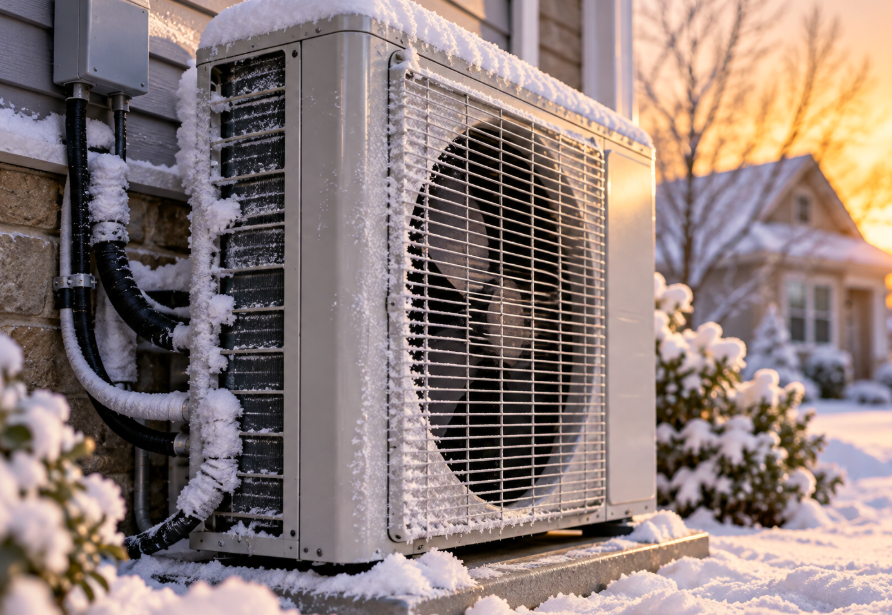
A heat pump does not always need to provide 100% of the home’s heating demand by itself. When outdoor conditions push the system beyond its available capacity, supplemental heat can help maintain the indoor temperature. The right backup strategy depends on the home’s heat loss, existing HVAC equipment, electrical service, fuel availability, and how the homeowner wants the system to operate.
There are two common approaches. Electric resistance heat strips provide backup in an all-electric system, while a dual-fuel system hands off to a gas furnace when the heat pump cannot keep up. The better option depends on what the home already has and whether the goal is lower gas use, simpler operation, or less reliance on heat strips.
If your furnace is in good shape, keeping it as backup is often the simplest route, and a hybrid heat pump and furnace system is worth comparing. If the furnace is near the end of its life, furnace replacement can be planned alongside the heat pump.
Before choosing the equipment, make sure the contractor explains each of these.
Your Home’s Heating Load
The contractor should tell you how much heat your home loses on a cold Dallas night, in BTUs per hour. That number comes from a heating load calculation, not square footage. Everything else on this list is measured against it.
The Balance Point
The balance point is the outdoor temperature where the heat pump’s output exactly matches your home’s heat loss. Above it, the heat pump handles the house alone. Below it, backup heat fills the gap, so a lower balance point means backup runs less often.
Backup Heat Size
Backup heat has to cover whatever the heat pump cannot on the coldest night you plan for. Too little leaves you cold during a hard freeze. Too much adds cost and electrical load you may never use.
Electric Strips or Gas Furnace
Ask which fuel your backup will use and why. With a dual-fuel system, also ask at what outdoor temperature the system switches from the heat pump to the furnace.
Thermostat Settings for Aux Heat
A heat pump thermostat decides when auxiliary heat turns on. Without an outdoor temperature lockout, the strips can kick on at 40°F just because someone bumped the setting up a few degrees. The contractor should set those controls, not leave them on factory defaults.
Electrical Panel Capacity
Heat strips draw a lot of power, and older panels may not have room for them. The contractor should confirm your panel and breakers can carry the full system before installation day.
Ductwork and Airflow
Air from a heat pump comes out cooler than air from a gas furnace, so the system depends on moving enough of it. Leaky or undersized ducts, especially in a Dallas attic, waste capacity before it reaches your rooms. Ask whether the existing ductwork was checked.
A cold-climate heat pump can cut how often backup heat runs, but backup heat is not a problem in itself. It should switch on because the weather calls for it, not because the heat pump was the wrong size for the house.
Standard vs. Cold-Climate Heat Pump: Which Is Better for Your Dallas Home?
There is no universal winner between a standard and cold-climate heat pump. The better choice depends on your home’s heating needs, existing backup system, and how much you want the heat pump to handle during colder weather. Use these six factors to narrow down which option fits your priorities.
| Factor | Standard Heat Pump | Cold-Climate Heat Pump |
|---|---|---|
| Upfront Cost | Lower initial investment | Higher initial investment |
| Cold-Weather Performance | More capacity loss as temperatures fall | Designed to maintain stronger output in colder conditions |
| Backup Heat Use | May rely more on auxiliary heat | Can reduce reliance on backup heat |
| Existing Gas Furnace | Works well with a dual-fuel setup | Can also work with backup, but may offer less added value |
| Home Condition | Good fit for well-insulated homes with manageable heat loss | More useful when heat loss is higher or winter capacity is a priority |
| Heating Goals | Better for homeowners focused on upfront value | Better for homeowners wanting greater heat-pump operation and less fossil-fuel use |
For many Dallas homeowners, a well-sized standard heat pump strikes a practical balance of cost and winter performance. A cold-climate model pulls ahead when you want to minimize backup heat, have higher heating demands, or are moving toward an all-electric home.
What Should You Compare Before Buying a Heat Pump for a Dallas Home?
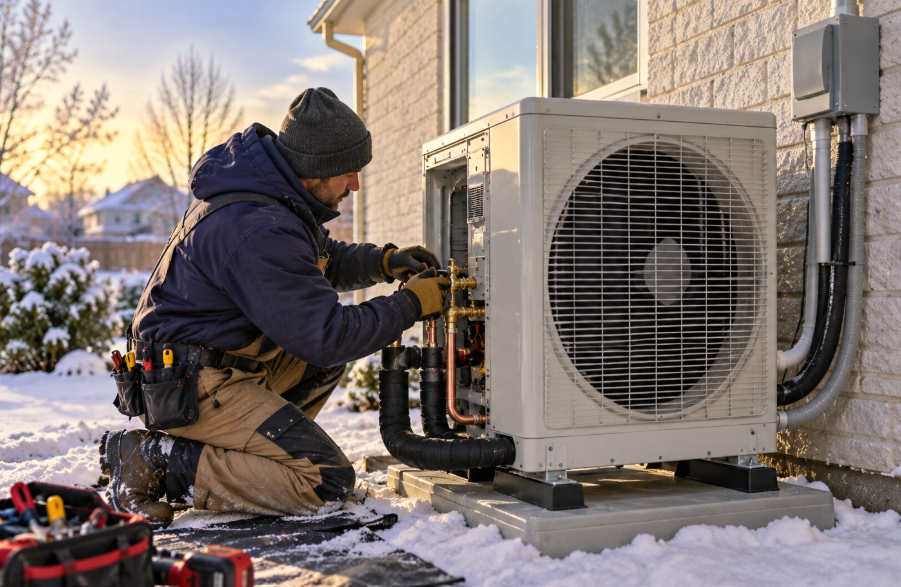
Do not compare heat pumps on HSPF2 or efficiency alone. HSPF2, the heating efficiency rating used since 2023, is a seasonal measurement, so it does not tell you how much heating capacity the system will provide during a single hard freeze. Low-temperature capacity, system sizing, backup strategy, and installation quality are equally important.
Before signing an installation agreement, request the specific information behind the recommendation. A contractor should be able to explain why the selected equipment fits your home and how it is expected to operate when outdoor temperatures fall.
Ask for these details in writing:
- Heating load calculation for your home.
- Heat pump capacity at 47°F, 17°F, and 5°F, when available.
- Expected balance point for the selected system.
- Backup heat type and capacity.
- Equipment model numbers and efficiency ratings (SEER2 and HSPF2).
- Ductwork and airflow requirements.
- Thermostat and auxiliary-heat control strategy.
- Installation and commissioning scope.
A heat pump labeled “cold-weather rated” tells you less than these eight answers do.
Why Choose Proactive Air Conditioning for Heat Pump Installation in Dallas?
Choosing between a standard and cold-climate heat pump starts with knowing how each will perform in your home. With 15+ years of Dallas HVAC experience, Proactive Air Conditioning’s NATE-certified technicians look at your heating load, equipment options, airflow, and backup heat before recommending anything.
We base the recommendation on the whole system rather than the most expensive equipment on the truck. That might be a standard heat pump, a cold-climate model, or a dual-fuel setup with your existing furnace, depending on your home’s condition and your long-term goals.
Thinking about a heat pump before the next hard freeze? Request a heat pump installation estimate and find out whether cold-climate equipment is worth it for your home, or call (469) 921-1136. If your AC is also near the end of its life, we can look at the heating and cooling sides together.
Frequently Asked Questions
Does a cold-climate heat pump cost more to operate during a Dallas freeze?
Not necessarily. A cold-climate model is designed to maintain more heating capacity as outdoor temperatures fall, which can reduce how much auxiliary heat is needed. However, operating costs depend on the home’s heat loss, electricity rates, equipment efficiency, and how often temperatures fall below the heat pump’s balance point.
Can a standard heat pump keep my Dallas home warm during an Arctic front?
It can, provided the system is properly sized and has an appropriate backup heating strategy. A standard heat pump may lose capacity as temperatures drop, but auxiliary heat can cover the remaining demand. The important question is not whether the unit operates during a freeze, but how much of the home’s heating load it can handle before backup is required.
Is a cold-climate heat pump worth it if my Dallas home already has a gas furnace?
It depends on your long-term heating goals. If you plan to keep the furnace as part of a dual-fuel system, a standard heat pump may provide a practical balance between upfront cost and performance. If you want to rely less on gas and reduce furnace operation during cold weather, cold-climate equipment may justify its higher initial cost.
Does my home’s insulation affect whether I need a cold-climate heat pump?
Yes. A poorly insulated or leaky home loses heat faster, increasing the amount of capacity the HVAC system needs during cold weather. Before upgrading to a more powerful heat pump, it is worth evaluating insulation, windows, air leakage, and ductwork. Improving the home’s envelope may reduce the heating load and change which equipment makes sense.
Is it normal for a heat pump to frost over or steam during a Dallas freeze?
Yes. In cold, damp weather, frost builds on the outdoor coil, and the heat pump runs a defrost cycle to melt it off, which can send up a cloud of steam for a few minutes. That is normal operation. A thick block of ice that does not clear after a defrost cycle, or a unit that stops heating, is a job for heat pump repair.