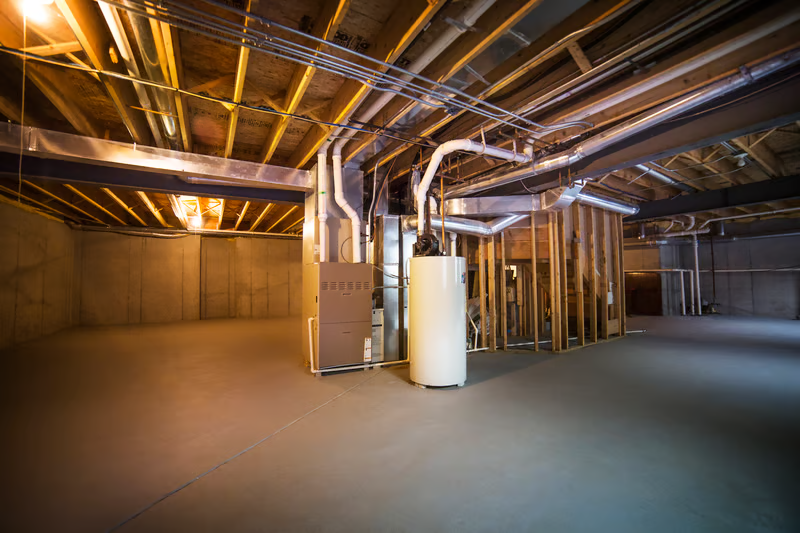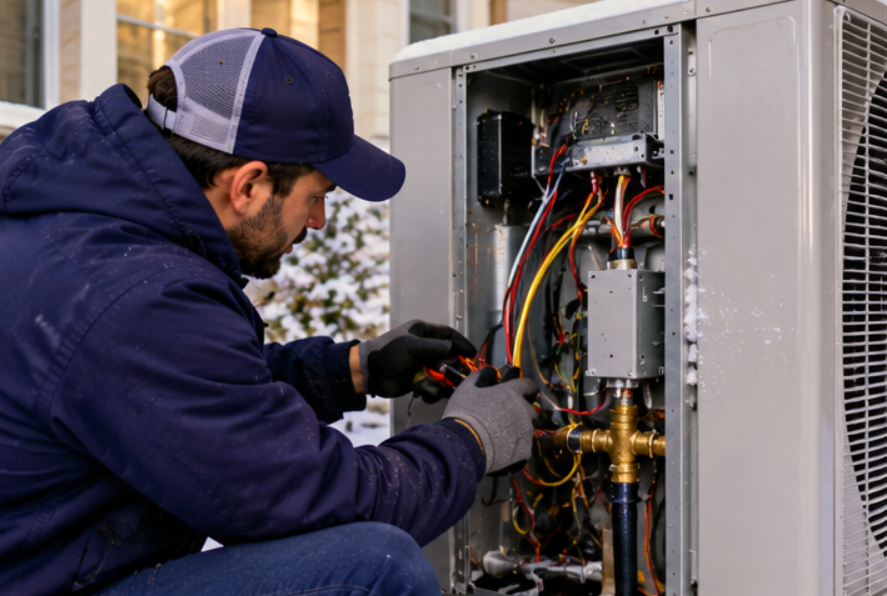
Every time your gas furnace kicks on, it lights a flame a few feet from the air your family breathes. So it’s fair to ask whether that’s safe. For Dallas homes, the short answer is yes, as long as the furnace is installed, vented, and checked the way it should be.
The risk lives in the exhaust. Burning natural gas creates carbon monoxide (CO), a gas you can’t see or smell, and your furnace’s job is to keep all of it moving out through the vent. The heat exchanger, burners, and venting share that job, and when one of them wears out, the protection weakens.
Dallas furnaces sit idle most of the year, so the first cold front is when a worn part gets its first test of the season. Below, we walk through how a gas furnace keeps CO out of your home, the warning signs worth acting on, what a gas furnace safety inspection checks, and when repair or replacement makes sense.
How Does a Gas Furnace Produce Heat Without Sending Combustion Gases Into Your Home?
A gas furnace creates heat by burning natural gas inside a controlled combustion area. The resulting heat passes through the furnace’s heat exchanger, while the blower moves household air around the outside of the exchanger and through the home’s ductwork. The two air streams should remain separated during normal operation.
That makes the heat exchanger the barrier between combustion gases and the air your family breathes. It works alongside the burners, venting, and safety controls, which keep combustion clean and move exhaust outside.
Several components work together for safe operation:
Gas Burners
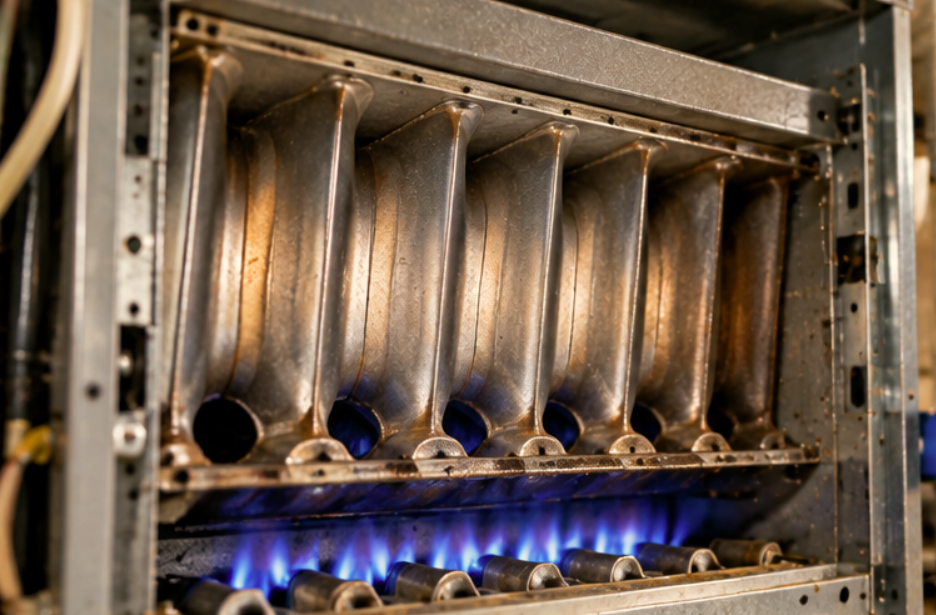
The burners are where natural gas mixes with air and lights. A clean burner holds a steady, mostly blue flame. A yellow, lazy, or flickering flame points to dirt, rust, or a poor fuel-to-air mix, and that kind of incomplete burn is how extra carbon monoxide starts.
Heat Exchanger
The heat exchanger is a set of metal chambers that the flame and hot exhaust pass through. Your household air flows over the outside of those chambers, picks up the heat, and never touches the exhaust inside. That wall of metal is the main barrier between combustion gases and the air you breathe.
Draft Inducer Motor
Today’s furnaces use a small fan called a draft inducer to pull exhaust through the heat exchanger and push it into the vent. A pressure switch confirms the inducer is running before the burners are allowed to light, so a failed inducer stops the furnace instead of letting exhaust linger.
Flue and Venting
The flue carries exhaust from the furnace to the outdoors. Standard-efficiency furnaces usually vent through a metal flue, while high-efficiency models use PVC pipe that exits through a wall or the roof. Either way, the path has to stay sealed, sloped correctly, and clear at the outdoor end.
Blower Assembly
The blower is the large fan that moves household air across the heat exchanger and out through your ductwork. It also keeps the exchanger from overheating. When a clogged filter or blocked return chokes that airflow, the metal runs hotter than it was designed to, which adds stress over time.
Safety Controls
A furnace has several switches whose only job is to shut it down when something goes wrong. The flame sensor cuts the gas if no flame is detected, the high-limit switch trips if the furnace overheats, and rollout switches trip if flames escape the burner area.
Think of the furnace as one combustion system rather than a box that blows warm air. A weak link anywhere in it affects safety.
Why Is the Heat Exchanger So Important to Furnace Safety?
Of all the parts above, the heat exchanger carries the most safety weight, and it is also the one that wears out quietly. It is the only thing standing between the exhaust inside the furnace and the air the blower sends through your Dallas home.
Because the heat exchanger goes through repeated heating and cooling cycles, its condition can change over time. Corrosion, cracking, overheating, moisture, and material deterioration can affect the exchanger. Age alone does not prove a failure, but an older furnace or one with operating problems deserves careful inspection.
What Wears Down a Furnace Heat Exchanger Over Time?
Several conditions can place additional stress on a heat exchanger. Restricted airflow can cause the furnace to operate hotter than intended, while improper combustion, corrosion, moisture, and repeated thermal cycling can contribute to deterioration over time.
How Does Restricted Airflow Stress a Heat Exchanger?
A dirty filter, blocked return, or other airflow restriction can reduce the amount of air moving through the furnace. When the system cannot move enough air, operating temperatures may increase and place additional stress on internal components, including the heat exchanger.
How Do Burner Problems Affect the Heat Exchanger?
The furnace needs the correct fuel-to-air mixture and proper burner operation to produce heat as intended. Problems with combustion can affect operating conditions and contribute to excessive heat or incomplete combustion, making combustion testing and burner inspection important parts of furnace safety.
Can You Spot a Cracked Heat Exchanger Yourself?
Usually not. Cracks often sit in areas you cannot see without taking the furnace apart, so a technician pairs a visual check with combustion and airflow readings before calling it. Sudden Dallas temperature swings add their own stress, one of several winter furnace problems Dallas homeowners face.
If you are told your heat exchanger is cracked, it is reasonable to ask for a photo of the damage before you agree to a new furnace. A technician who found a crack can show you where it is.
How Can Carbon Monoxide Become a Problem With a Gas Furnace?
Carbon monoxide is an odorless and colorless gas produced by fuel combustion. A gas furnace is one of the household appliances that can produce it, which is why installation, venting, maintenance, and detection all matter. The CDC recommends having your heating system serviced by a qualified technician every year.
A furnace-related CO problem is not limited to a cracked heat exchanger. Improper combustion, blocked or defective venting, installation problems, or other failures can also contribute to unsafe combustion conditions. The CPSC warns that fuel-burning heating systems can cause CO poisoning if they are improperly installed, poorly maintained, have defective or blocked venting, or are misused.
What Warning Signs Point to a Gas Furnace Safety Problem?
Carbon monoxide itself gives no warning you can see or smell, so the absence of an odd smell proves nothing. These signs come from the furnace and from your household, and each one comes with how fast to act.
CO Alarm Sounding
An alarm means CO has been detected in your home. Get everyone, pets included, outside into fresh air and call 911 from there. Once the house is cleared, have the furnace checked before it runs again, and emergency heating service can handle that same day.
Headaches, Dizziness, or Nausea at Home
Symptoms like these that show up indoors and ease once you leave the house can point to CO exposure. Treat it as an emergency: get outside, call 911, and get medical care.
Rotten-Egg Smell Near the Furnace
That smell is the odorant added to natural gas, which means a possible gas leak rather than carbon monoxide. Leave the house without flipping any switches, and call 911 or Atmos Energy from outside. This is an emergency too.
Soot or Scorch Marks Around the Furnace
Black streaks around the burner area, the cabinet, or the vent connector mean the fuel is not burning cleanly or exhaust is escaping where it should not. Turn the furnace off and book an inspection before running it again.
Yellow or Flickering Burner Flame
A healthy gas flame is steady and mostly blue. A yellow, orange, or dancing flame points to incomplete combustion, which produces more CO. Schedule service soon, and test your CO alarms in the meantime.
Furnace Keeps Shutting Off or Restarting
Repeated ignition attempts or short shutdowns often mean a safety control is tripping, such as a dirty flame sensor or an overheating limit switch. It is rarely an emergency on its own, so book a repair within a few days rather than resetting it over and over.
Damaged or Blocked Vent Pipe
A vent pipe that is rusted, sagging, disconnected, or blocked at the outdoor end can push exhaust back into the house. Stop using the furnace until it is repaired, and check the outdoor vent after storms for leaves or nests.
Burning Smell on the First Cold Day
A dusty, burning smell the first time the heat runs each fall is usually dust burning off the heat exchanger, and it should fade after a short while. If it lingers, smells electrical, or comes with smoke, turn the system off and call for service.
What Should a Dallas Furnace Safety Inspection Check?
A furnace safety inspection should involve more than changing the filter and looking at the cabinet. The technician should operate the heating system and evaluate the combustion and safety components that only show themselves while the furnace is running.
The exact steps vary by furnace design and manufacturer, but a thorough inspection covers these areas.
Burner Operation Check
The technician runs the furnace through a full start-up and watches the ignition sequence. The flame should light smoothly, sit evenly on each burner, and burn steady and mostly blue. Dirty or rusted burners get cleaned so the gas burns completely.
Flame Sensor Test
The flame sensor is a thin metal rod that proves a flame is present, and without that signal the gas valve closes. A coated sensor can make a furnace light and then shut off within seconds, so the technician checks its reading and cleans it if needed.
Gas Pressure Reading
Using a manometer at the gas valve, the technician measures the pressure feeding the burners and compares it to the manufacturer’s spec. Pressure set too high can overheat the heat exchanger, and pressure set too low can cause a poor burn.
Heat Exchanger Inspection
The technician inspects the visible surfaces of the heat exchanger with a light, and a camera where access allows, looking for cracks, rust-through, or soot. Not every section can be seen without taking the furnace apart, so the visual check is paired with combustion and airflow readings.
Flue and Vent Check
The vent connector and flue are checked for rust, loose joints, correct slope, and a clear outdoor exit. On standard-efficiency furnaces, the technician also confirms the exhaust is drafting up the flue instead of spilling back into the room.
Safety Switch Testing
The high-limit switch, rollout switches, and pressure switch are tested to confirm each one shuts the furnace down when it should. A safety switch that has been bypassed or does not respond needs fixing before the furnace runs again.
Airflow and Temperature Rise
The technician checks the filter, return, and blower, then measures temperature rise, the difference between the air entering and leaving the furnace. Every furnace label lists an acceptable range, and a rise above it means the heat exchanger is running too hot.
Combustion Analysis
A combustion analyzer placed in the flue measures the CO and oxygen in the exhaust, which shows whether the furnace is burning cleanly. A good inspection also checks the air around the furnace with a CO meter while it runs.
A yearly furnace maintenance visit is the natural time to run these checks, ideally before the first cold front of the season.
How Can Dallas Homeowners Reduce Carbon Monoxide Risk?
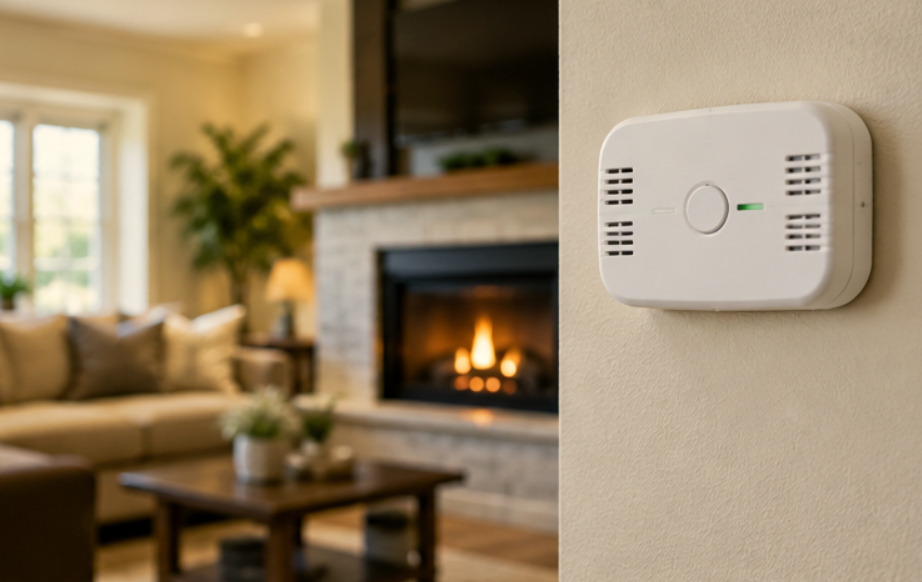
Furnace maintenance is only one part of household CO safety. The CDC recommends having fuel-burning heating equipment serviced annually by a qualified technician, while CPSC recommends CO alarms on every level of the home and outside sleeping areas.
Homeowners should also pay attention to changes in furnace operation and avoid modifying combustion or venting components themselves. If an alarm sounds or you suspect carbon monoxide exposure, do not stay inside trying to find the cause. Leave the home and call 911 from outside.
Homeowners can focus on these basic safety measures:
- Test CO Alarms: Test alarms regularly according to the manufacturer’s instructions.
- Check Alarm Placement: Keep CO alarms on every level and outside sleeping areas.
- Schedule Service: Have fuel-burning heating equipment professionally inspected annually.
- Watch Venting: Keep outdoor furnace vents clear of debris and obstructions.
- Notice Changes: Report unusual furnace sounds, odors, shutdowns, or operating changes.
- Avoid DIY Repairs: Leave gas, combustion, electrical, and heat-exchanger work to qualified professionals.
None of these steps guarantee a furnace never has a problem. Together, they make it more likely that one gets caught early.
When Should You Repair or Replace a Gas Furnace?
A suspected heat-exchanger problem does not automatically mean the entire furnace needs to be replaced. The decision should be based on the condition of the equipment, the nature of the failure, the furnace’s age, repair requirements, operating efficiency, and whether continued operation remains appropriate.
A professional diagnosis should separate a repairable component issue from a condition that affects safe furnace operation. If the heat exchanger or another combustion-related component is compromised, the technician should explain what was found and compare the practical repair and replacement options rather than recommending replacement based only on age.
| Factor | When Repair May Make Sense | When Replacement Deserves Consideration |
|---|---|---|
| Furnace Age | Relatively newer equipment with otherwise good condition | Older furnace with limited remaining service life |
| Repair Cost | Smaller component repair with reasonable cost | Major repair that approaches replacement economics |
| Safety Condition | No significant combustion or safety defect | Heat exchanger or critical safety problem is confirmed |
| Efficiency | Furnace still provides acceptable operating efficiency | Older equipment has significantly lower efficiency |
| Repair History | Few previous breakdowns | Repeated repairs or multiple aging components |
| Home Requirements | Existing furnace remains properly sized | Replacement allows better sizing or system improvements |
Safety comes first. If a furnace has a confirmed combustion or heat exchanger problem, do not keep running it because it still makes heat. Get the diagnosis explained, compare the repair and replacement options, and if replacement makes sense, Dallas furnace installation should start with sizing the new unit to your home.
Why Choose Proactive Air Conditioning for Furnace Safety in Dallas?
Warm air at the registers does not tell you a furnace is safe. With 15+ years of Dallas HVAC experience, Proactive Air Conditioning’s NATE-certified technicians inspect the parts you cannot safely check yourself, including combustion components, heat exchanger condition, gas operation, safety controls, and airflow.
If we find a problem, you get a clear explanation of what is happening and whether the next step is repair, maintenance, or replacement. That is the “service versus sales mentality” Stacie Arciniega called out in a review of our team.
Noticing any of the warning signs above, or worried about an aging heat exchanger? Book furnace repair in Dallas for a safety evaluation. If replacement makes more sense, plan your furnace replacement with a unit sized to your home. You can also call (469) 921-1136.
Frequently Asked Questions
How often should a Dallas gas furnace have its heat exchanger inspected?
A professional furnace inspection at least once a year can help identify combustion, airflow, venting, and heat-exchanger concerns before the heating season.
Can a dirty air filter damage a furnace heat exchanger?
A severely restricted filter can reduce airflow and cause the furnace to operate under higher temperatures. Regular filter replacement helps maintain proper airflow and reduces unnecessary stress on furnace components.
Does an old furnace automatically have a damaged heat exchanger?
No. Furnace age alone does not prove that a heat exchanger has failed. Its condition should be determined through a professional inspection and evaluation of furnace operation.
Should I switch from a gas furnace to a heat pump for safety in Dallas?
A heat pump burns no fuel, so it produces no carbon monoxide. That can be a reason to switch, but a well-maintained gas furnace with working CO alarms is also a safe choice, and a dual-fuel system pairs the two. If you are weighing it, compare heat pump installation options, and keep CO alarms if any other appliance in your home burns gas.
What should I do if a heat exchanger problem is suspected?
Have the furnace professionally evaluated before continuing normal operation. The technician can determine the condition of the heat exchanger and explain whether repair, replacement, or further testing is appropriate.