When your AC quits on a 100-degree Dallas afternoon, the price is only half the story. You also need to know what failed, whether the fix will hold, and whether the number you were quoted covers the whole job. A good HVAC company should walk you through all three before asking you to sign off.
That matters more here than in a lot of places. A Dallas air conditioner can run most of the day for months, so a small fault turns into warm rooms, longer run times, and a bigger electric bill fast. This guide breaks down what common repairs tend to cost in the Dallas market, how the numbers shift from one system to another, and how to spot a quote that is missing information before you pay for it.
Pricing Starts With the Diagnosis, Not a Guess
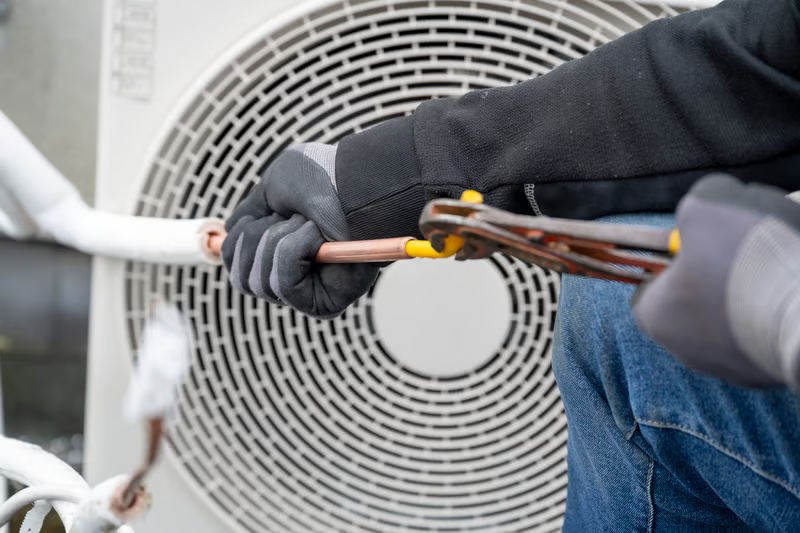
No one can quote a fair repair price knowing only that the AC “isn’t cooling.” That same symptom can trace back to a clogged filter or a thermostat setting, or to a failed motor or a refrigerant leak that costs ten times as much. The first job is finding what actually stopped the system from doing its work.
Take an air conditioner that runs nonstop but never hits the thermostat setting. The cause might be restricted airflow, a dirty outdoor coil, low refrigerant, or a worn electrical part. Each one points to a different repair, which is exactly why there is no single price for “an AC that won’t cool.” Our cooling technicians check the likely causes in order before naming a number.
Airflow First
A packed filter, a blocked return, or a duct problem forces the system to work harder and leaves rooms warm even while it runs. Airflow is cheap to check and often explains symptoms that look expensive at first glance.
Electrical Parts
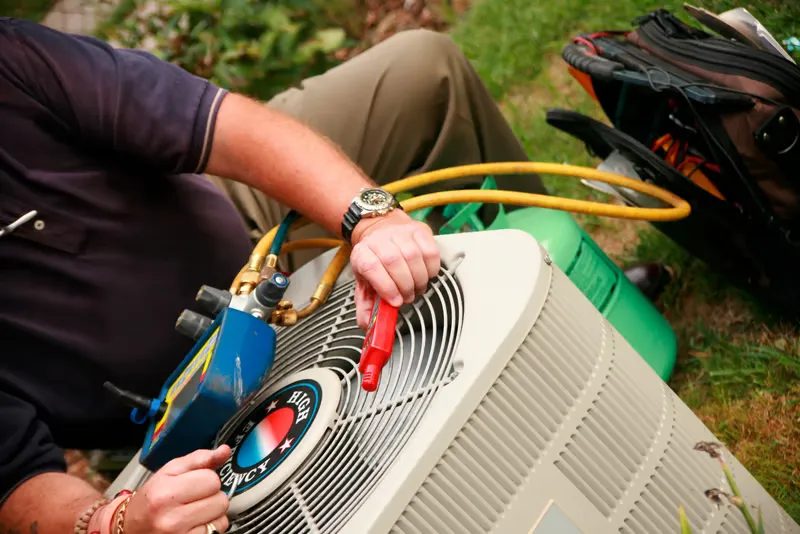
Capacitors, contactors, wiring, and motors are common failure points, and testing them tells us which part actually died instead of swapping something fine. This step is where a careful diagnosis saves you the most money.
Refrigerant
An AC does not burn through refrigerant. A low charge usually means a leak that needs to be found and sealed. Topping it off without fixing the leak just buys you a repeat bill in a few weeks.
Coils and Drainage
Dirty coils drag down cooling, and a clogged condensate drain can trip a safety switch and shut the system off. Both show up often in Dallas homes, and both are worth checking during any no-cool diagnosis.
Warm rooms getting worse by the afternoon? Schedule AC repair before a small fault turns into a heat-stressed compressor.
What Common Dallas AC Repairs Actually Run

Here is where most homeowners want a straight answer. The ranges below reflect typical Dallas-area pricing in 2026 for the repair installed, meaning parts and labor together. Your number can land higher or lower based on the part brand, system size, access, and whether it is an after-hours call, but this gives you a realistic starting point.
- Capacitor: roughly $130 to $400. The most common AC failure and one of the cheapest. A weak one strains the compressor, so catching it early is worth it.
- Contactor: roughly $150 to $400. The relay that powers the outdoor unit. Often the next part to wear out after a capacitor.
- Thermostat: roughly $100 to $500, depending on whether it is a basic or smart model.
- Condensate drain clear or float switch: roughly $75 to $300. A common Dallas summer call when the drain line clogs and shuts the system down.
- Condenser or blower fan motor: roughly $300 to $900. Variable-speed and ECM motors sit at the top of that range.
- Blower motor assembly: roughly $400 to $1,200 for higher-end or variable-speed units.
- Control board: roughly $200 to $600.
- Refrigerant leak repair: roughly $300 to $1,600, with many jobs near $800. The price depends on where the leak is, how hard it is to find, and how much refrigerant the system needs afterward.
- Compressor: roughly $1,000 to $2,800. This is the repair that most often opens a replacement conversation.
Most everyday AC repairs land between $150 and $650. The big-ticket items, compressors and coils and serious refrigerant work, are the outliers that can climb past $1,000. Almost every visit also carries a diagnostic fee, usually in the $69 to $230 range in Dallas, and a fair company credits that toward the repair when you approve the work.
How Costs Change From One System to Another
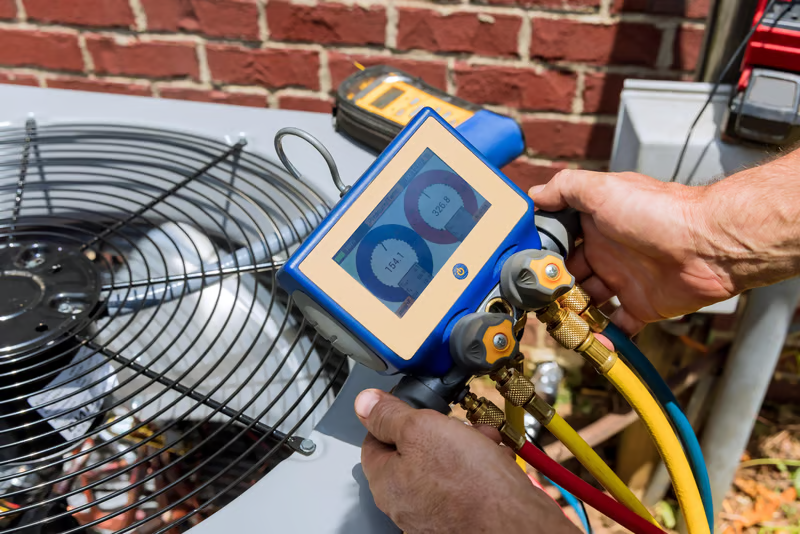
“HVAC repair” covers several different machines, and the equipment you own shifts the math. Here is how the common systems compare.
Central Air Conditioners
This is the baseline for the numbers above. A ducted split system uses familiar, widely stocked parts, so labor time on routine repairs stays predictable. Older units are the exception, since discontinued parts and worn secondary components can stretch both the price and the timeline.
Heat Pumps
A heat pump both heats and cools, which means more runtime across the year and a few extra parts like the reversing valve and defrost controls. Routine electrical repairs cost about the same as an AC, but the added components give it more places to fail, and a compressor issue tends to run higher. Our heat pump repair technicians test both the heating and cooling sides, since a heat pump problem can hide in either mode.
Furnaces
Gas furnace repairs split cleanly into cheap and not-cheap. Ignitors, flame sensors, and pressure switches are on the lower end. A blower assembly, inducer motor, gas valve, control board, or heat exchanger costs more and, with any fuel-burning system, comes with safety testing for combustion and carbon monoxide. Dallas winters are short, so these faults often surface on the first hard cold snap. If your heat quits when a front rolls through, our furnace repair team can check the ignition and safety components before the house cools off.
Ductless Mini-Splits
Mini-splits are usually easier to reach than ducted equipment, which can trim labor on common repairs. Most ductless fixes, capacitors, fan motors, sensors, and line-set refrigerant work, run about $150 to $800. A compressor on a ductless system is the expensive case, often $800 to $2,500. Because these units are more specialized, it pays to have someone who works on them regularly, and our ductless mini-split repair technicians service both single-zone and multi-zone setups.
What a Clear Repair Quote Should Spell Out
Once the problem is found, the estimate should be easy to read. You should not have to decode abbreviations or wonder whether the number covers the entire fix.
A useful quote names the failed part, the recommended work, the parts and labor included, and the warranty that comes with the repair. If there is any chance more work turns up once the panel is open, that gets said before anyone starts.
The Problem, Named
The estimate should say what failed, not just “AC repair.” Knowing whether it is a capacitor, a blower motor, a thermostat, or a drain issue makes the recommendation easy to judge.
The Recommended Fix
You should understand what happens next. If a part is being replaced, the quote should say which one and what testing follows so you know the repair held.
Parts and Labor Together
Ask whether the price includes both the part and the labor. A lower number that leaves labor out is not really the lower quote, which matters most when you are comparing two companies.
Warranty Terms
A repair should come with clear warranty terms. Ask how long the part is covered and whether labor is covered separately.
Approval Before Extra Charges
If something else turns up mid-repair, you should be called before any charge is added. Say a Dallas AC repair is quoted at $450 and the technician finds a second issue worth $300. You should hear about that $300 and approve it before the work happens, not read about it on the invoice.
When Repair and Replacement Belong in the Same Conversation
Repair is usually the right call when the fault is isolated, and the rest of the system is in decent shape. A capacitor, a thermostat, or a drain part does not mean it is time to replace an entire air conditioner.
Repair Pricing For Older HVAC Equipment
The conversation changes when the equipment is older, the repairs are stacking up, or a major part has failed. Two rules of thumb help. The 50 percent rule says if a single repair costs more than half of a new system, replacement is usually the smarter money.
The age rule multiplies the system’s age by the repair cost, and a result over about $5,000 leans toward replacement. A $600 blower motor on a 10-year-old system that has never given trouble is a clear repair. That same age with a capacitor last summer, a contactor this spring, and now a failing motor is a different story.
For context, a full system replacement in Dallas often runs between $5,500 and $13,800, depending on size, efficiency rating, ductwork condition, and how tricky the install is.
Heat pump and multi-zone ductless replacements can sit at the higher end. None of that means replacement is the answer, only that a $1,000-plus repair on aging equipment earns a look at the system’s condition and remaining life first. If that path makes sense, our air conditioning installation service is a separate discussion, not something assumed during a repair visit.
What Makes the Same Repair Cost More or Less
Two homeowners can get different prices for what sounds like the same job, and the reasons are usually fair.
- Timing. After-hours and weekend calls often carry higher rates. A capacitor found at 2 p.m. on a Tuesday and the same capacitor found during a Saturday-night heat wave are not the same bill.
- Part availability. Older or discontinued equipment may need custom-ordered parts, which raises both the price and the wait.
- Refrigerant type. Systems on phased-out refrigerants cost more to service, since the refrigerant itself is scarcer and pricier.
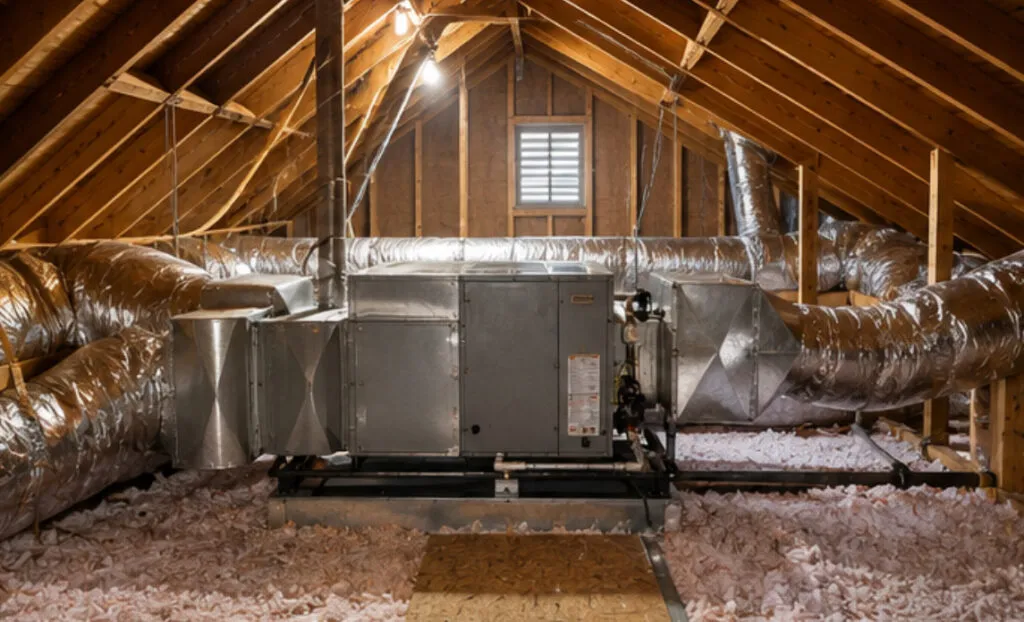
- Access. A rooftop unit or a tight attic adds labor time compared with a ground-level condenser.
The best defense against a surprise is maintenance. A spring tune-up catches a tired capacitor or a slow drain before July turns it into an emergency call. Want to head off the expensive-season repairs? Book AC maintenance before the heat finds the weak part first.
Red Flags in a Pricing Conversation
A low price is not automatically a deal, and a high one is not automatically a rip-off. What matters is whether the company can explain what you are paying for and why the repair is needed. Watch for these:
- A vague explanation of what failed
- Pressure to approve expensive work on the spot
- No written description of the repair
- Parts and labor that are not broken out
- Missing warranty terms
- Extra charges that were never mentioned upfront
- No repair-versus-replacement talk when the system is clearly aging
If you are told the AC needs a $1,200 repair but never shown what broke or what the price covers, it is fair to ask for a clearer explanation before you approve it. Clear pricing is not a promise that every repair is cheap. It is making sure you understand the problem, the fix, and the cost before the work starts.
How Proactive Air Conditioning Handles Repair Pricing
A repair estimate should give you enough to decide with confidence. Proactive Air Conditioning starts by finding the problem, explaining what was found, and laying out the recommended repair before any work is authorized. You should know what needs fixing, what the repair includes, and what the quoted price covers.
With 15 years of Dallas HVAC experience and NATE-certified technicians, our team takes a repair-first approach when the existing system can reasonably be restored. When equipment is older or facing a major failure, we explain whether replacement is worth weighing and give you the numbers to compare, without turning it into a sales pitch. Whether the right answer is a quick fix today or a bigger conversation, you get clear pricing before work begins. Call (469) 921-1136 to get a straight answer on your Dallas HVAC repair.