Replacing an HVAC system located in a Dallas attic is more involved than swapping equipment in an easily accessible garage or utility room. The contractor has to work around limited access, extreme attic temperatures, existing ductwork, drainage, electrical connections, and the physical space available for the new equipment.
A replacement that ignores those conditions can leave the new system struggling with the same comfort problems as the old one.
Dallas summers make the installation details even more important. Attic temperatures can become extremely high during the cooling season, while the air conditioner may operate for long stretches to keep the living space comfortable. Before approving an HVAC replacement, the contractor should evaluate the entire installation area, not just recommend a new unit based on the old system’s tonnage.
Why Does an Attic HVAC Replacement Need More Planning?
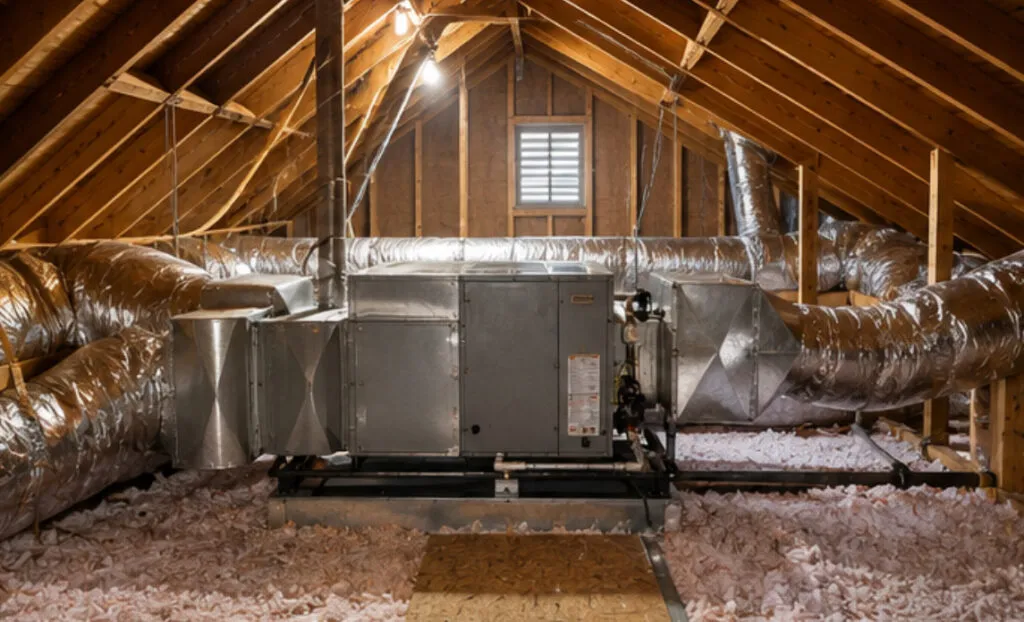
An attic HVAC system replacement involves more than removing an old unit and setting a new one in its place. The contractor has to account for the attic opening, equipment platform, duct connections, drainage, electrical setup, and the space needed to service the system later.
In Dallas, the extreme summer heat adds another consideration because the equipment and ductwork operate in a much harsher environment than the living areas below.
The existing system can provide useful information, but its size should not automatically determine the replacement. If the home has new insulation, replacement windows, an addition, or changes to the ductwork, the home’s cooling requirements may have changed significantly since the original system was installed.
Plan Around Attic Access
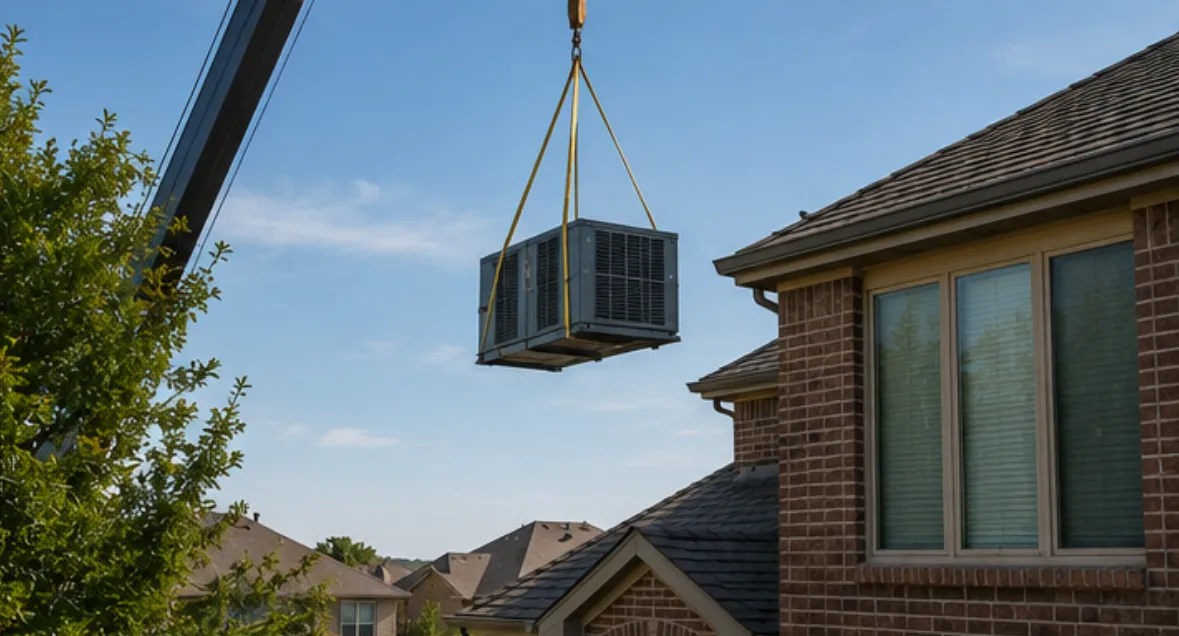
Getting a new air handler into an attic can be one of the most overlooked parts of the project. The contractor should measure the access opening, evaluate the path to the equipment platform, and determine how the old unit will be removed before installation day. If the opening or platform is inadequate, modifications may be necessary before the new equipment can be safely positioned.
Account for Dallas Attic Heat
Equipment installed in an attic spends its summer operating in a much hotter environment than the rooms it cools. The contractor should inspect the condition of the surrounding insulation and accessible ductwork for damage, compression, or deterioration. Addressing these issues during replacement can help prevent the new system from losing cooling performance through the attic before conditioned air reaches the living space.
Protect Against Drain Problems
An attic air handler produces condensation whenever the AC is running. Because the equipment is located above finished living areas, a clogged drain or overflowing pan can create a much bigger problem than simply losing cooling. The replacement should include properly routed drainage and safety protection designed to shut the system down if condensate cannot drain normally.
Leave Room for Future Service
The new equipment shouldn’t be squeezed into the smallest available corner simply because it fits. A technician will eventually need access to filters, electrical components, motors, controls, and other service points.
Planning adequate working space during installation can make future maintenance and repairs safer, faster, and less disruptive.
These details are easy to overlook when comparing HVAC replacement prices, but they can have a direct effect on the installation and future service experience. A properly planned Dallas attic replacement should account for how the equipment gets in, how it operates in the heat, how condensation is handled, and how technicians will access it years later.
What Should Your Contractor Check Before Recommending New Equipment?
A professional HVAC replacement should begin with an evaluation of the existing system and the home, not with a catalog of equipment models. The contractor should determine how much cooling the property actually needs and identify anything in the existing installation that could prevent a new system from performing properly.
This evaluation is particularly important when replacing an older attic system. If the new equipment is installed without addressing a restricted return, leaking ducts, inadequate drainage, or an electrical concern, you could end up with a newer system that still produces weak airflow or uneven temperatures.
| What Should Be Checked | Why It Matters |
|---|---|
| Cooling requirements | Helps determine the appropriate system capacity instead of copying the old unit’s size |
| Existing ductwork | Leaks, crushed sections, or restrictions can reduce delivered airflow |
| Return-air capacity | An inadequate return can make the system work harder and reduce comfort |
| Attic insulation | Poor insulation can increase heat gain around ductwork and equipment |
| Refrigerant lines | Existing lines must be evaluated for compatibility with the replacement system |
| Electrical connections | The new equipment must have the appropriate electrical supply and protection |
| Drain system | Primary and secondary drainage should safely handle condensate |
| Thermostat and controls | Existing controls may not support the features of the replacement equipment |
This type of pre-installation evaluation gives you a much clearer picture of what you’re actually buying. Instead of paying for an equipment swap, you’re paying for an HVAC system that has been selected and installed around the requirements of your Dallas home.
How Does Dallas Attic Heat Affect HVAC Performance?
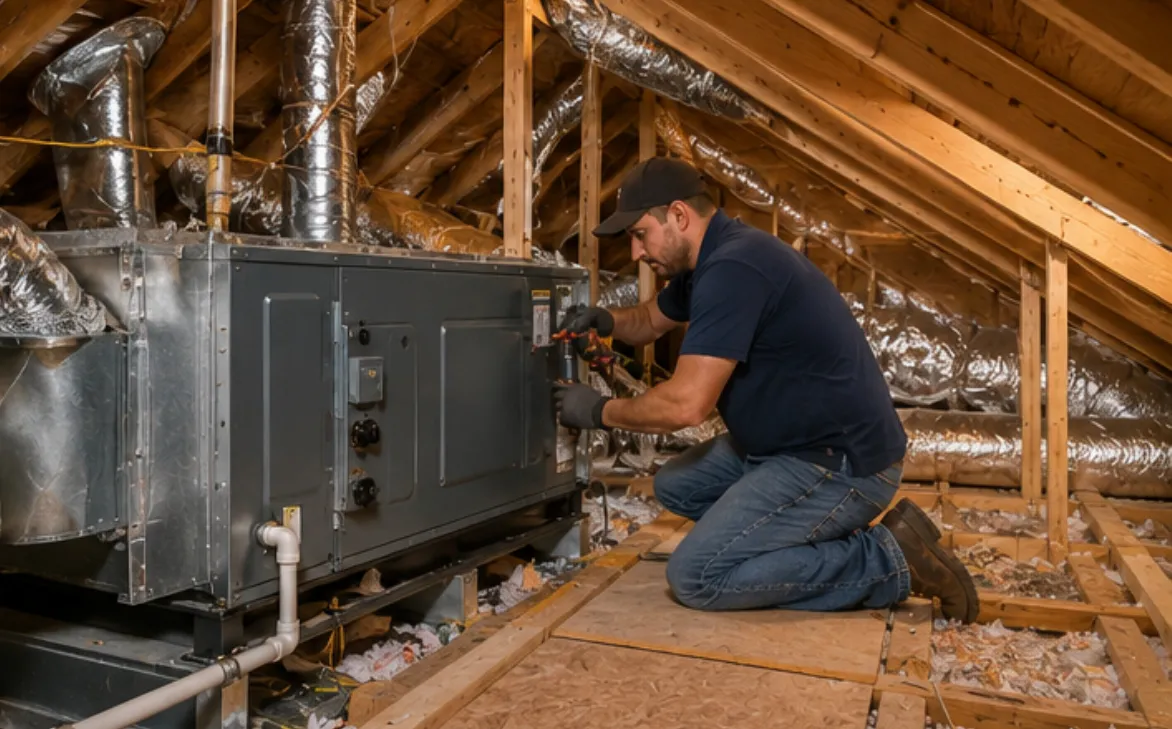
A Dallas attic can become an extremely demanding environment for an HVAC system during summer. While the air conditioner is working hard to cool the rooms below, the equipment and ductwork may be exposed to intense attic heat.
That makes the condition of the ducts, insulation, airflow, and equipment especially important when replacing an attic system.
If these issues aren’t addressed during replacement, a new and more efficient air conditioner can still struggle to deliver the comfort you expect.
- Long cooling cycles: Dallas AC systems may run for extended periods during peak summer heat, but continuous operation without reaching the thermostat setting can indicate airflow, sizing, ductwork, or equipment problems.
- Attic duct heat gain: Ducts running through a hot attic can lose some of their cooling capacity when insulation is damaged, compressed, or inadequate. Separated connections can also allow conditioned air to escape before reaching the rooms.
- Restricted airflow: A clogged filter, damaged duct, undersized return, or blower problem can reduce the amount of conditioned air reaching the living space. Installing a larger AC won’t necessarily fix the underlying restriction.
- Uneven room temperatures: If an upstairs bedroom or room on the sunny side of the house stays several degrees warmer, the problem may involve duct sizing, insulation, return air, or airflow distribution rather than insufficient AC capacity.
- Higher cooling demand: Poor attic insulation can allow more heat into the living space, forcing the air conditioner to work longer to maintain the thermostat setting. Addressing insulation and duct conditions during replacement can improve the overall performance of the new system.
This is why replacing an attic HVAC system should involve more than choosing a new unit. The equipment, ductwork, airflow, insulation, drainage, and installation conditions all need to work together if the new system is going to handle Dallas heat effectively.
When Should Ductwork or Airflow Be Addressed During Replacement?
Replacing the attic air conditioner without checking the duct system can leave the same comfort problems behind. If a bedroom has always been warmer, certain vents have weak airflow, or the system takes too long to reach the thermostat setting, the equipment may not be the only issue.
Ductwork should be evaluated while the replacement is being planned because some corrections are much easier to make while the attic equipment is already accessible.
Repair Damaged Connections
Loose or separated duct connections can allow conditioned air to escape into the attic instead of reaching the rooms below. Accessible connections should be inspected and sealed where necessary.
Replace Deteriorated Insulation
Older attic ducts may have compressed, damaged, or insufficient insulation. Improving the insulation around accessible ductwork can reduce unwanted heat gain during Dallas summer conditions.
Correct Airflow Restrictions
Crushed flexible duct, sharp bends, undersized sections, or poorly configured returns can restrict airflow. The contractor should identify these problems before deciding that a larger air conditioner is needed.
Address Uneven Cooling
If one part of the house consistently runs warmer, the solution may involve duct modifications, return-air improvements, balancing, or a zoning system rather than simply increasing equipment capacity.
The objective is to make sure the new HVAC system can deliver the cooling it produces. A properly selected air conditioner paired with poorly performing ductwork can still result in hot rooms and long run times.
What Should Happen During a Dallas Attic HVAC Replacement?
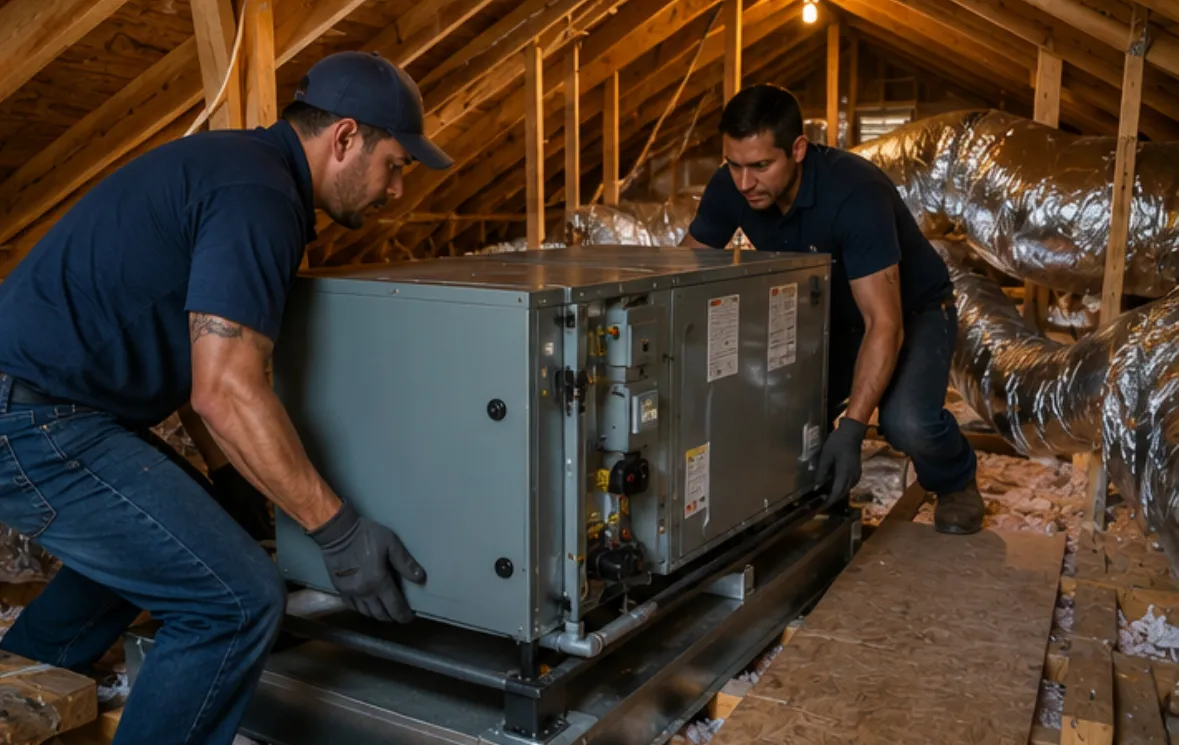
Installation day should be more than removing one box and setting another in its place. Because attic equipment is difficult to access, the contractor should have a clear plan for protecting the home, removing the existing system, positioning the replacement, and checking everything before leaving.
A typical replacement involves several important steps:
- Protect the home: Flooring, walls, stairs, and other interior areas should be protected while equipment and materials are moved through the house.
- Remove the old equipment: The existing indoor and outdoor components are safely disconnected and removed according to applicable procedures.
- Prepare the installation area: The contractor checks the platform, connections, ductwork, drainage, and electrical setup before placing the new equipment.
- Install the new system: The indoor unit, outdoor equipment, refrigerant connections, ductwork, drainage, thermostat, and electrical components are connected according to the installation requirements.
- Test the system: The technician checks operation, airflow, temperature performance, and other important readings before considering the job complete.
- Explain the new equipment: You should know how to operate the thermostat, change the filter, recognize basic warning signs, and arrange future maintenance.
An attic replacement can often be completed within a day when the installation is straightforward, but difficult access, duct modifications, electrical work, or drainage corrections can extend the project. A reputable contractor should explain the expected scope before work begins.
Why Proactive Air Conditioning Is a Strong Fit for Attic HVAC Replacement

An attic HVAC replacement requires more than choosing a new air conditioner. The contractor needs to understand how the equipment, ductwork, airflow, drainage, and attic environment work together, particularly during Dallas’ long cooling season.
With more than 15 years of Dallas HVAC experience and NATE-certified technicians, Proactive Air Conditioning approaches attic replacement with the condition of the entire system in mind. Our team evaluates the existing installation, explains what needs attention, and provides clear pricing before work begins.
If your attic AC is aging, struggling to keep rooms comfortable, or requiring increasingly frequent repairs, our air conditioning installation service can help you evaluate whether replacement makes sense. And if the existing system is still worth repairing, our air conditioning repair service provides another path rather than automatically recommending replacement.