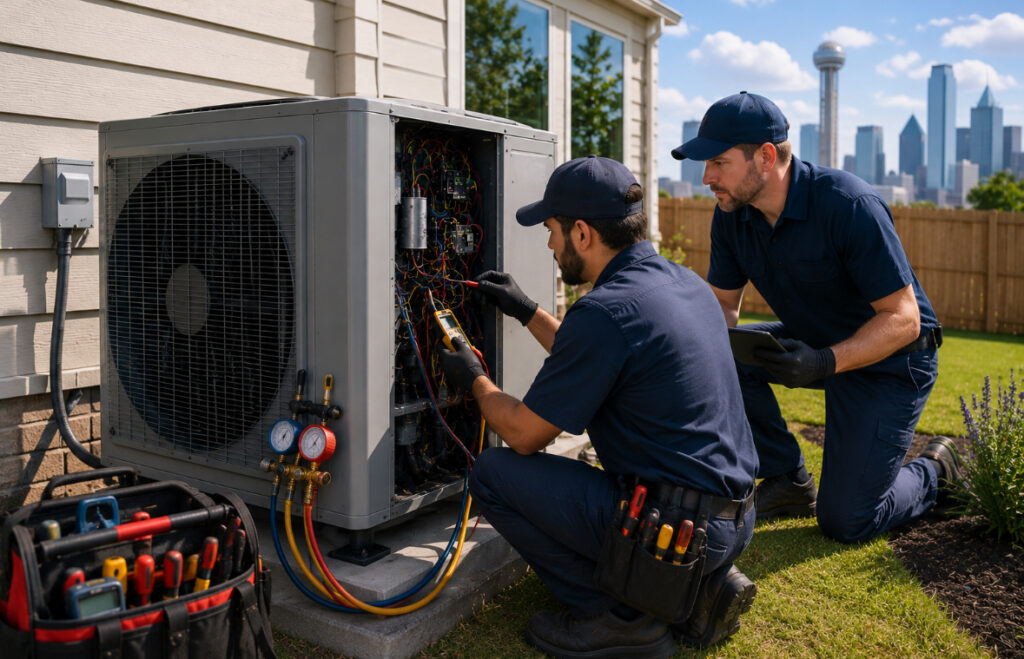
In Dallas, spring temperatures often rise quickly, causing heat pumps to start running longer before summer officially begins. In many North Texas homes with attic HVAC systems, dust buildup, pollen, humidity, and rising attic heat can already reduce airflow and cooling efficiency during spring months.
Scheduling professional heat pump maintenance early helps identify hidden issues like dirty coils, airflow restrictions, or electrical wear before extreme summer temperatures place heavy strain on the system. In this guide, you’ll learn how spring maintenance helps improve cooling performance, reduce breakdown risks, and prepare your heat pump for Dallas’s peak cooling season.
How Dallas Spring Weather Causes Heat Pump Problems
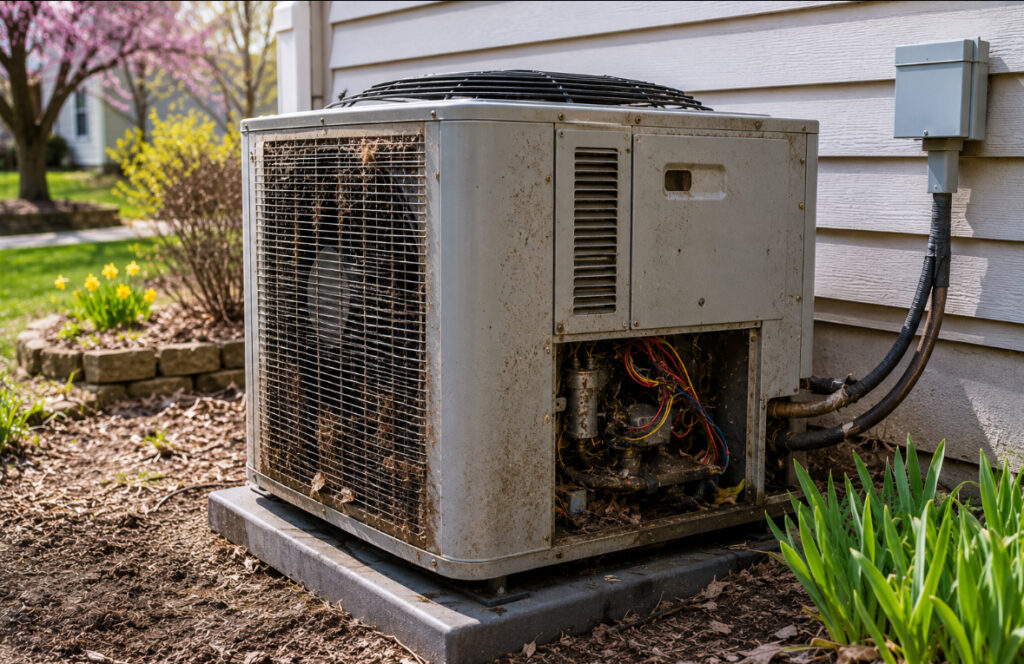
Spring weather in Dallas creates several conditions that increase strain on heat pump systems. Rising outdoor temperatures combined with high pollen levels, dust buildup, and increasing humidity reduce cooling efficiency and airflow performance.
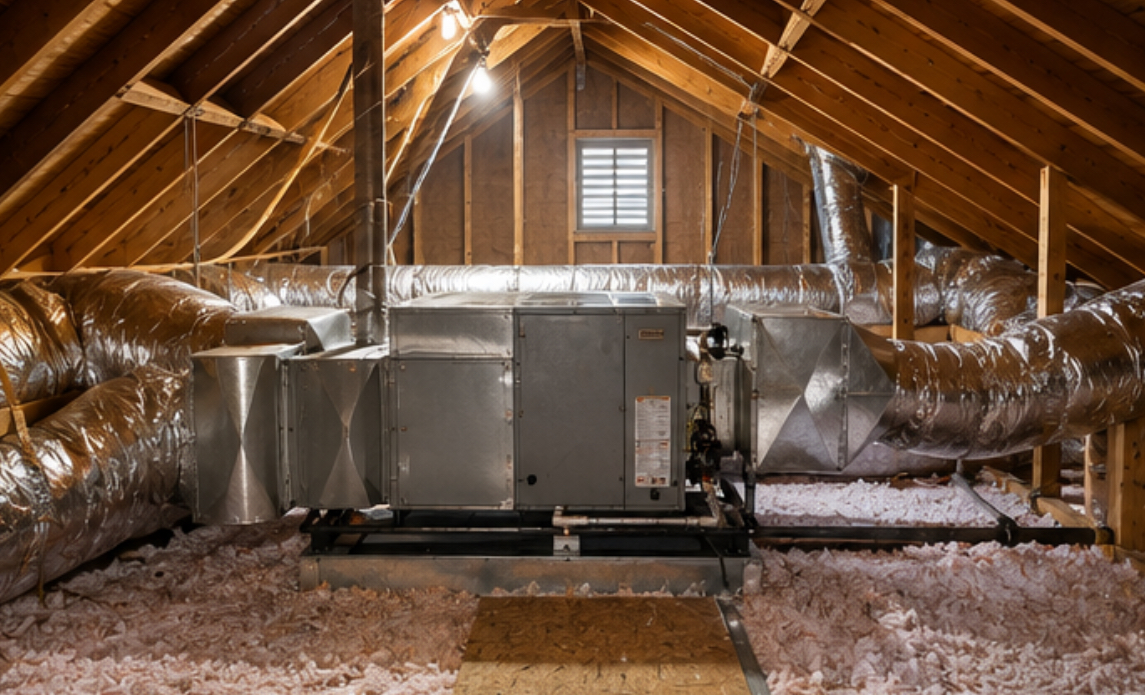
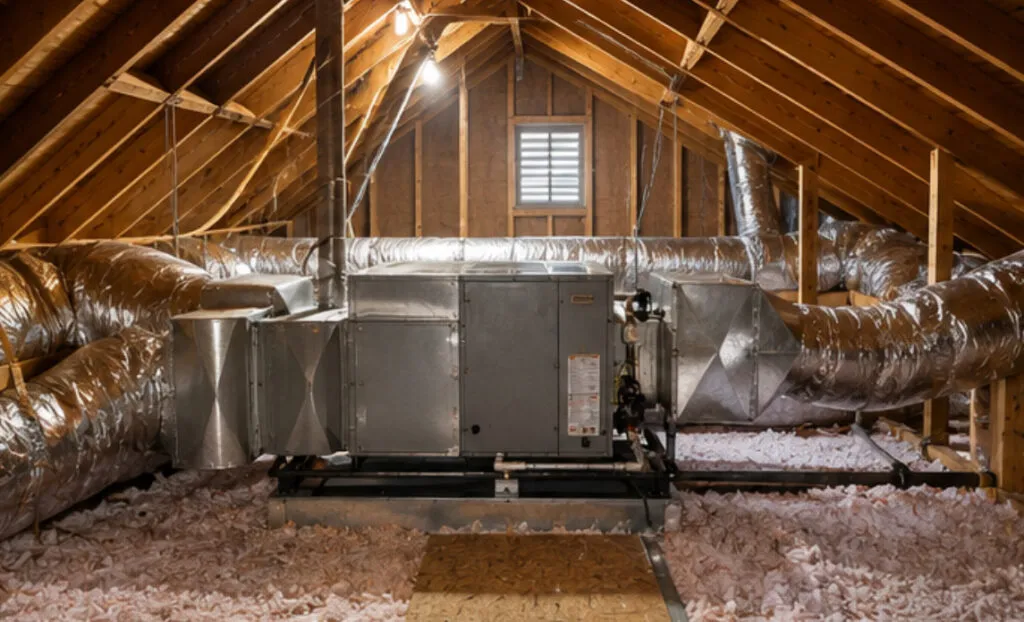
In many Dallas homes with attic-installed HVAC systems, additional attic heat also raises operating temperatures inside the equipment.
These seasonal conditions often lead to restricted airflow, drainage issues, and longer cooling cycles before summer officially begins. Technicians commonly find clogged filters, dirty outdoor coils, and early electrical wear during spring inspections. Scheduling seasonal heat pump maintenance helps prevent these smaller issues from turning into expensive repairs during peak cooling season.
Warning Signs Your Heat Pump Needs Repair
Heat pumps usually show early warning signs before major performance problems develop. In many Dallas homes, homeowners first notice uneven temperatures, weak airflow, rising energy bills, or unusual noises as the system begins struggling under heavier spring demand. Recognizing these symptoms early helps prevent larger HVAC failures during the summer.
| Warning Sign | What It Often Indicates |
|---|---|
| Uneven room temperatures | Airflow imbalance or duct issues |
| Rising energy bills | Declining system efficiency |
| Weak airflow from vents | Dirty filters or blower restrictions |
| Buzzing or grinding noises | Electrical or motor wear |
| Longer cooling cycles | Reduced heat transfer performance |
Addressing these issues early through professional heat pump repair helps restore efficient cooling performance before peak summer temperatures arrive.
Why Schedule Spring Heat Pump Maintenance Now
Spring is the best time to service a heat pump before Dallas summer temperatures place the system under continuous demand. Once outdoor temperatures rise above 95°F, HVAC companies often experience increased emergency repair calls, making appointment availability more limited during peak season.
Early heat pump maintenance helps homeowners identify hidden airflow restrictions, refrigerant imbalance, or electrical wear before these issues affect cooling performance. Systems that receive preventive maintenance before summer typically operate with better airflow, shorter cooling cycles, and lower overall strain during long periods of heat.
Benefits of spring heat pump maintenance include:
- Cleaner condenser coils helping the system release heat more efficiently during Dallas heatwaves
- Balanced refrigerant pressure improving cooling output and preventing longer runtime
- Improved airflow performance reducing hot spots in upstairs and attic-facing rooms
- Electrical component testing helping identify weak capacitors before summer breakdowns occur
- Drainage system inspection preventing humidity issues and water overflow during humid conditions
Scheduling maintenance before peak cooling season also gives homeowners time to choose the right HVAC contractor instead of rushing during an emergency breakdown. Preventive service helps reduce unexpected repair costs and keeps the heat pump operating more reliably throughout Dallas’s longest summer months.
What’s Included in a Professional Heat Pump Inspection
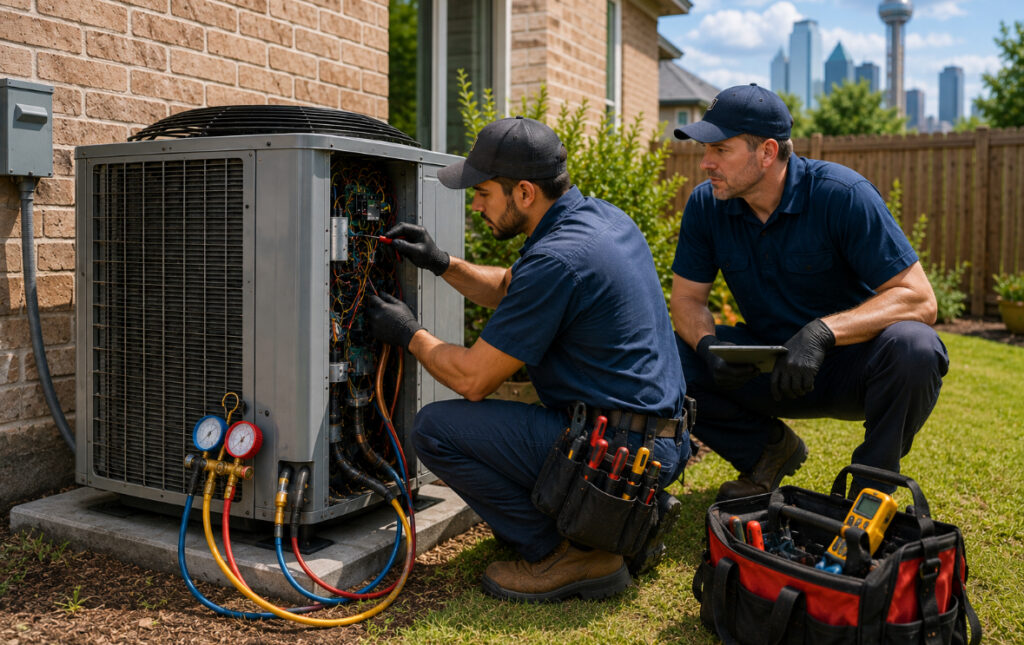
Professional heat pump inspections evaluate how efficiently the entire HVAC system operates before peak cooling season begins. During service visits, technicians inspect airflow, refrigerant levels, electrical performance, coil condition, and drainage systems to identify hidden issues that could reduce cooling efficiency later in summer.
Coil Cleaning and Inspection
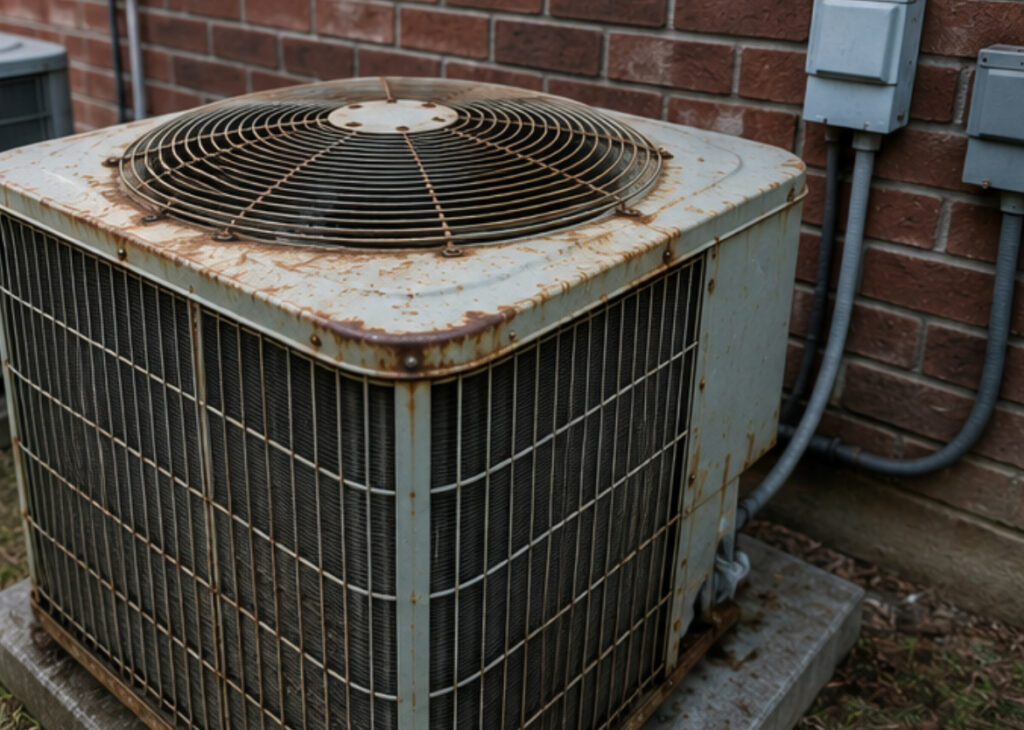
Outdoor condenser coils in Dallas homes collect dust, pollen, and debris quickly during spring. Dirty coils reduce heat transfer efficiency and force the heat pump to work harder during cooling cycles. Cleaning and inspecting coils improves airflow performance and reduces unnecessary system strain.
Electrical Component Testing
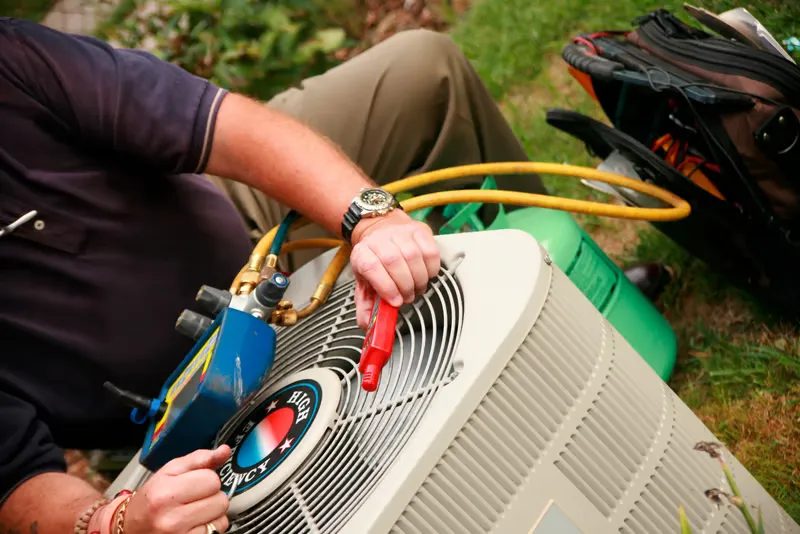
Spring inspections also include testing capacitors, relays, contactors, and electrical wiring connections. These components often experience wear after winter operation and can fail under heavy summer demand if not inspected early. Technicians check voltage performance and identify signs of overheating or electrical instability.
Refrigerant and Pressure Evaluation
Technicians measure refrigerant pressure levels to ensure the system can transfer heat efficiently during high outdoor temperatures. Low refrigerant often causes weak cooling, longer runtime, and increased compressor strain. Early refrigerant testing helps prevent major cooling performance issues later in summer.
Airflow and Drainage Inspection
Airflow restrictions and clogged drainage lines are common issues found during spring HVAC inspections. Technicians inspect filters, blower performance, vents, and condensate drains to ensure conditioned air moves properly throughout the home. Proper drainage also helps maintain indoor humidity control during Dallas’s humid spring and summer months.
How Heat Pump Repair Improves Summer Cooling
In Dallas, heat pumps often begin losing cooling efficiency before homeowners notice a complete performance drop. Restricted airflow, refrigerant imbalance, and dirty coils gradually force the system to run longer while delivering weaker cooling output, especially during high humidity and extended summer heatwaves.
Professional heat pump repair helps improve:
- Airflow performance – Restores stronger and more balanced air circulation
- Cooling efficiency – Helps the system remove heat more effectively
- Indoor comfort – Reduces uneven temperatures between rooms
- Humidity control – Improves moisture removal during humid Dallas weather
- System runtime – Prevents excessively long cooling cycles
- Component strain – Reduces workload on compressors and blower motors
After professional heat pump repair, many homeowners notice faster cooling response, steadier indoor temperatures, and improved overall HVAC efficiency during Dallas’s peak summer season.
Preventing Costly Heat Pump Breakdowns: Pro Tips
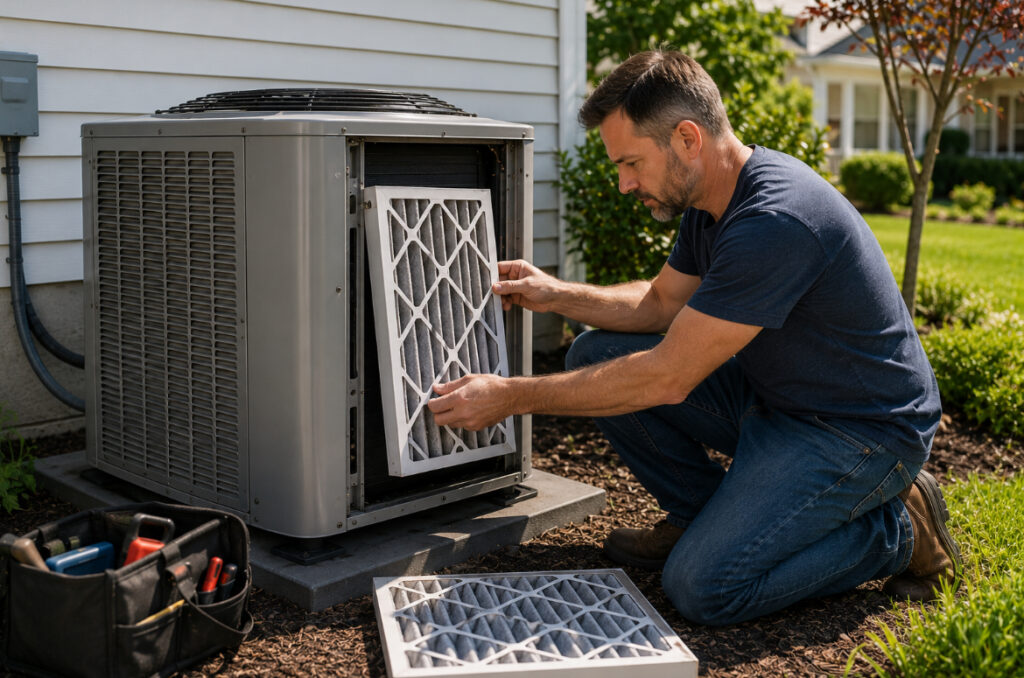
Preventive heat pump maintenance is one of the most effective ways to reduce unexpected heat pump failures during summer. In Dallas, long cooling cycles combined with dust exposure and attic heat gradually increase strain on HVAC systems throughout the season.
Simple ways homeowners can reduce breakdown risks:
- Replace HVAC filters every 30–60 days during heavy cooling season
- Keep outdoor units free from leaves, dust, and debris buildup
- Monitor for weak airflow or unusual operating noises
- Schedule annual heat pump maintenance before summer begins
- Address rising energy bills early before larger efficiency problems develop
These steps help maintain stable cooling performance and reduce unnecessary HVAC strain during peak summer demand. Choosing the right heat pump contractor is equally important because proper diagnosis and maintenance directly affect how efficiently the system performs throughout summer.
Why Choose Proactive Air Conditioning in Dallas, TX

Preparing your heat pump before summer helps reduce the risk of cooling problems when Dallas temperatures and humidity begin rising rapidly. Systems that receive early maintenance typically operate more efficiently, experience fewer breakdowns, and maintain better indoor comfort throughout long summer cooling cycles.
At Proactive Air Conditioning, our technicians focus on identifying airflow restrictions, refrigerant imbalance, electrical wear, and other efficiency problems before they affect system performance. Through professional heat pump maintenance and preventive HVAC inspections, we help homeowners maintain reliable cooling performance and avoid unnecessary HVAC repairs during Dallas’s hottest months.