An air conditioner that kept your home comfortable a few summers ago may struggle once Dallas experiences consecutive days above 100°F. Many homeowners first notice the problem during July or August when the system runs almost continuously, certain rooms stay warmer than others, and electricity bills climb despite keeping the thermostat at the same setting. While extreme heat places extra demand on every cooling system, older air conditioners often lose the capacity to keep up.
Age alone doesn’t mean your AC needs replacing, but it does affect how efficiently it handles today’s cooling demands. Worn compressors, declining airflow, outdated refrigerants, and lower SEER ratings all reduce performance during North Texas heatwaves. Understanding why older systems fall behind helps homeowners decide whether professional air conditioner repair or a complete air conditioner installation and replacement is the better long-term investment.
Why Do Older Air Conditioners Struggle More During Dallas Heatwaves?

Every air conditioner gradually loses efficiency as its components wear over time. During mild spring weather, those changes may go unnoticed. Once outdoor temperatures climb into the triple digits, however, the system has much less reserve capacity to remove heat from your home.
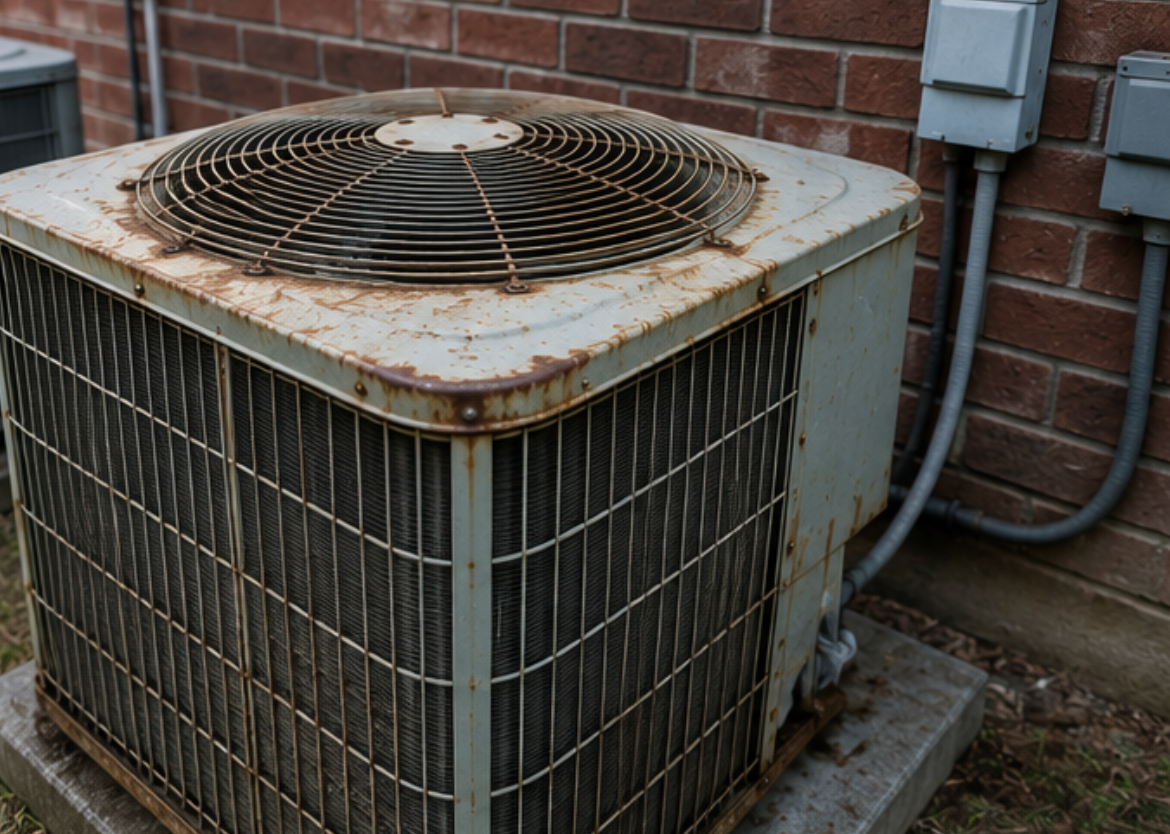
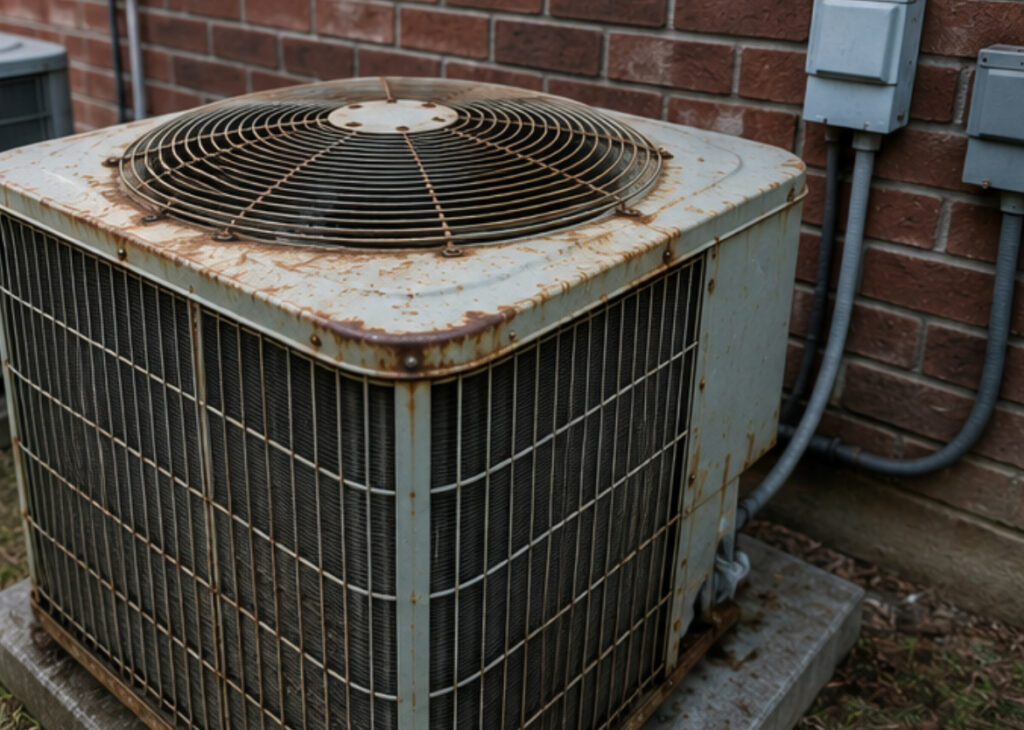
Older compressors lose pumping efficiency, condenser coils transfer heat less effectively, and blower motors often move less air than they did when the equipment was new. Together, these issues force the system to run much longer while producing less cooling.
| Aging HVAC Component | How It Affects Summer Cooling |
|---|---|
| Worn compressor | Reduces cooling capacity during peak temperatures. |
| Dirty or deteriorated condenser coil | Makes heat rejection less efficient. |
| Aging blower motor | Delivers less conditioned air throughout the home. |
| Declining electrical components | Reduces overall system reliability. |
| Older refrigerant technology | Operates less efficiently than many newer systems. |
Many Dallas homeowners begin noticing these performance changes once the system reaches 12 to 15 years of service, especially during prolonged heatwaves. A professional air conditioner maintenance visit can show whether cleaning, airflow correction, or a targeted repair can restore performance before replacement is considered.
How Do Older SEER Ratings Affect Your Energy Bills?
One of the biggest differences between an older air conditioner and a modern high-efficiency system is energy consumption. Many systems installed 15 to 20 years ago were rated around SEER 10 to 13, while today’s equipment is built to meet much higher SEER2 efficiency standards. That means an aging system often uses significantly more electricity to produce the same amount of cooling.
During Dallas summers, where air conditioners may operate for 10 to 14 hours a day, lower efficiency quickly translates into higher utility costs.
Common signs your older AC is becoming less efficient include:
- Higher Monthly Energy Bills: Cooling costs increase even when your thermostat settings stay the same.
- Longer Cooling Cycles: The system rarely shuts off during the afternoon.
- Reduced Indoor Comfort: Rooms take longer to cool after the sun heats the home.
- Frequent Repairs: Aging components require more service each cooling season.
- Uneven Temperatures: Some areas of the home remain warmer despite continuous operation.
If these symptoms continue year after year, comparing repair costs against a professional air conditioner installation and replacement evaluation may provide better long-term value.
Can Your Ductwork Make an Older AC Perform Even Worse?
Many homeowners focus only on the outdoor unit, but the duct system has a major impact on how well an older air conditioner performs. Even if the equipment is operating properly, leaking or undersized ductwork can prevent conditioned air from reaching the rooms that need it most. In Dallas attics where summer temperatures regularly exceed 140°F, every air leak wastes cooled air before it reaches the living space.
Older homes are especially susceptible because the duct system may have been installed decades ago and never inspected after renovations or equipment upgrades. It’s common for contractors to replace the air conditioner while leaving aging ductwork untouched, reducing the overall performance of the new system.
| Ductwork Issue | Impact on Cooling Performance |
|---|---|
| Air leaks in attic ducts | Lose conditioned air before it reaches living areas. |
| Undersized return ducts | Restrict airflow and increase system runtime. |
| Poor duct insulation | Allows cooled air to warm before reaching rooms. |
| Improper duct balancing | Creates uneven temperatures throughout the home. |
| Aging duct connections | Reduce overall HVAC efficiency during peak cooling demand. |
Before recommending equipment replacement, an experienced air conditioning contractor should evaluate both the HVAC system and the ductwork. In many cases, improving airflow alongside a new installation delivers significantly better comfort, efficiency, and long-term performance.
When Does Repairing an Older AC Stop Making Financial Sense?
Not every aging air conditioner should be replaced immediately, but there comes a point where repeated repairs no longer provide good value. If your system requires frequent service during every Dallas summer, struggles to maintain comfortable temperatures, and continues driving up energy costs, investing in repairs may only delay a larger expense.
Repairs Are Becoming More Frequent
If you’ve needed multiple air conditioning repairs over the past two or three cooling seasons, major components may be reaching the end of their service life. Replacing individual parts often doesn’t address the overall decline in system performance.
Cooling Costs Keep Rising
An older system that runs longer every summer can add hundreds of dollars to annual electricity costs. Comparing those operating expenses with the long-term savings of a modern air conditioner installation and replacement often helps homeowners make a more informed decision.
Major Components Are Beginning to Fail
Replacing a compressor, evaporator coil, or condenser coil on an aging system can represent a significant investment. When several expensive components begin wearing out at the same time, replacement is often the more practical long-term solution.
Your Cooling Needs Have Changed
Home additions, renovated living spaces, or improved insulation can change your home’s cooling requirements. An experienced air conditioning contractor can determine whether your existing system is still properly matched to your home’s current cooling load.
Choosing between repair and replacement shouldn’t be based on age alone. Evaluating repair history, operating costs, and overall system performance provides a much clearer picture of which option delivers the best long-term value.
How Do HVAC Contractors Determine Whether an Older AC Should Be Replaced?
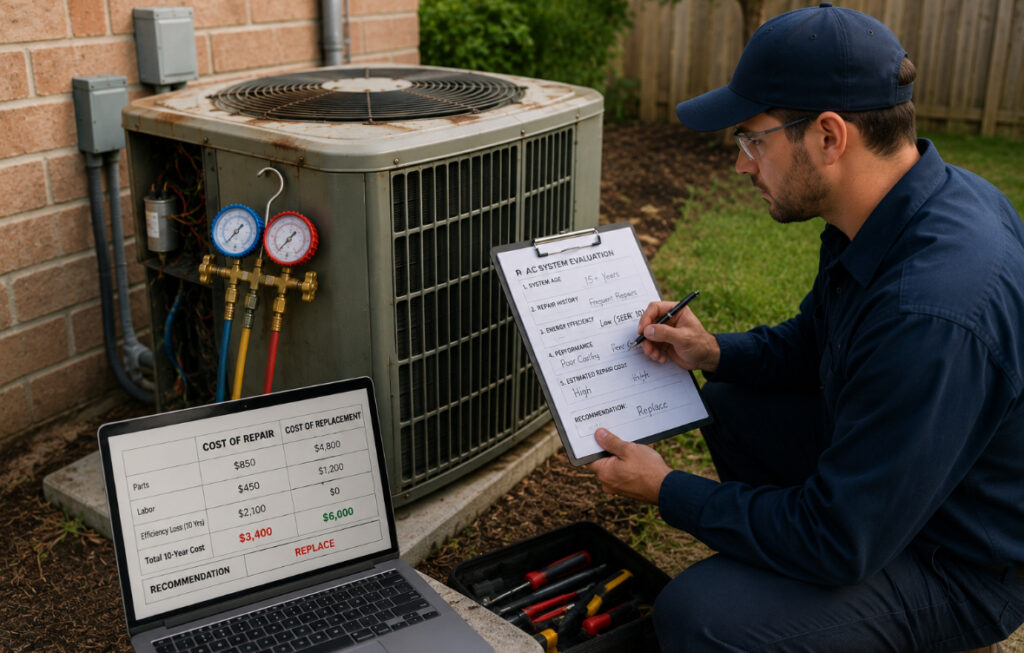
Replacing an air conditioner shouldn’t be based on guesswork or a sales recommendation alone. A qualified HVAC contractor evaluates how the system performs under peak cooling demand before recommending replacement. This helps homeowners understand whether declining comfort is caused by aging equipment, airflow problems, or another issue affecting system performance.
| Professional Evaluation | Why It Matters |
|---|---|
| Cooling capacity assessment | Determines whether the system can meet the home’s current cooling load. |
| Refrigerant performance testing | Verifies the system is operating within manufacturer specifications. |
| Airflow and ductwork inspection | Identifies restrictions or leaks reducing system efficiency. |
| Electrical component testing | Detects worn capacitors, contactors, and compressor issues. |
| Repair cost comparison | Helps determine whether replacement provides better long-term value. |
A complete evaluation often prevents homeowners from replacing equipment unnecessarily while ensuring systems that are no longer cost-effective are identified before another Dallas heatwave.
Why Choose Proactive Air Conditioning for AC Replacement in Dallas, TX?

An older air conditioner doesn’t always need to be replaced, but it should be evaluated by a contractor who focuses on performance instead of assumptions. At Proactive Air Conditioning, we assess your system’s cooling capacity, efficiency, repair history, and overall condition before recommending the best solution for your home.
With 15 years of HVAC experience and NATE-certified technicians, we’ve helped Dallas homeowners make confident decisions through professional air conditioner installation and replacement, honest system evaluations, and expert guidance.
If your older air conditioner struggles every time Dallas temperatures reach triple digits, contact Proactive Air Conditioning today. We’ll explain your options clearly and help you choose the solution that delivers dependable comfort, improved efficiency, and long-term value.