A ductless mini-split can heat a Dallas home through winter, but whether it can keep the entire house comfortable depends on the equipment, the home’s heating load, insulation, and how the system is configured. Dallas winters are mild most of the time, but a few Arctic fronts each year can push temperatures into the teens, putting more demand on a heat pump.
That does not mean you need a furnace to get through every cold night. Modern cold-climate mini-splits can continue producing useful heat at low outdoor temperatures, while variable-speed compressors adjust output as conditions change. The more important question is whether the system is sized right for the space it is expected to heat.
If you are considering a ductless system for your Dallas home, the decision should go beyond the unit’s advertised capacity. This guide explains how mini-splits heat in winter, what happens during Dallas cold snaps, where ductless systems make the most sense, and when a central system or backup heat may be a better fit.
Can a Ductless Mini-Split Heat a Dallas Home in Winter?
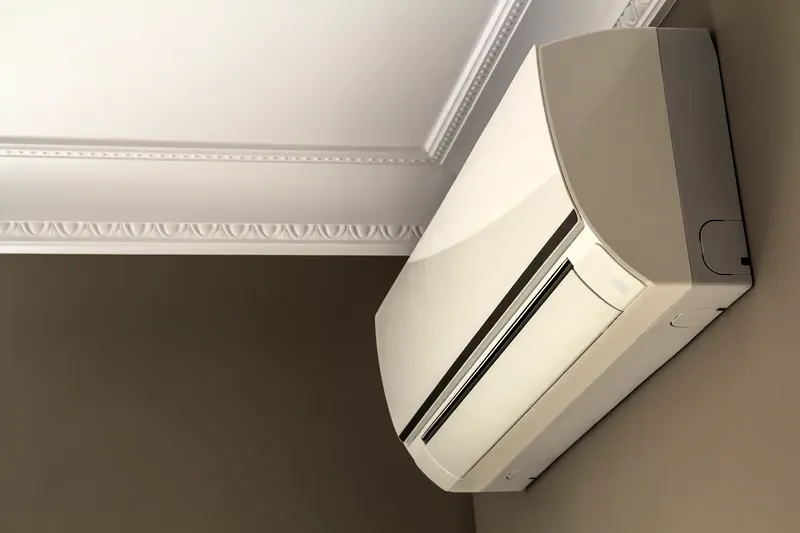
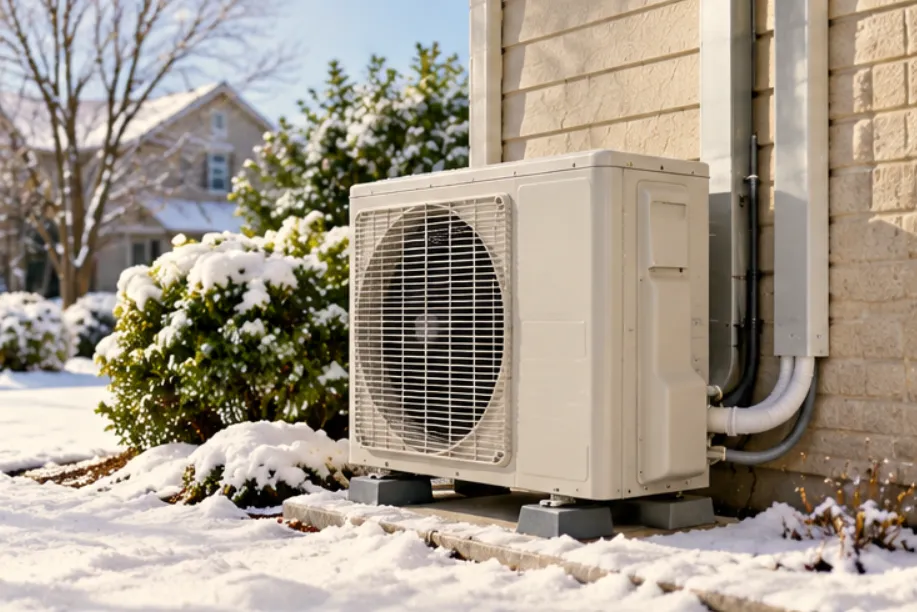
Yes. A ductless mini-split is a heat pump that moves available heat from outdoor air into your home rather than generating heat by burning fuel. Even when the outdoor temperature feels cold, the air still contains usable heat energy. The system extracts that heat through the outdoor coil and transfers it indoors through the refrigerant circuit. That is the idea behind ductless heating: one system that heats the room in winter and cools it in summer.
Most modern mini-splits use inverter-driven compressors that can vary their speed instead of switching on and off. During a mild Dallas afternoon, the compressor can reduce output as the heating demand falls. When temperatures drop, it can increase capacity to provide more heat without repeatedly starting and stopping.
The important limitation is that heating capacity changes with outdoor temperature. A unit that delivers a certain amount of heat at 47°F may produce considerably less at 17°F or 5°F. That is why Dallas homeowners should look at low-temperature performance rather than choosing equipment based only on the largest number shown on the product specifications.
What Happens to a Mini-Split During a Dallas Cold Snap?
There is no universal temperature where every mini-split suddenly stops heating. Capacity decreases gradually as outdoor temperatures fall, and the practical limit depends on the equipment model, sizing, building envelope, and the amount of heat the home needs at design conditions.
When comparing equipment, look at the manufacturer’s published capacity at several outdoor temperatures rather than relying on the 47°F rating alone.
| What to Check | What It Tells You |
|---|---|
| Capacity at 17°F | Whether the unit can keep up with the room’s heat loss during a Dallas cold snap |
| Minimum operating temperature | The lowest outdoor temperature at which the unit keeps heating |
| Cold-climate rating | Whether the model is built to hold its output in hard freezes |
| Base pan heater | Whether the outdoor unit has a small heater that keeps ice from building up underneath |
| Design heating load | How much heat the room needs on a cold night |
A standard mini-split may be adequate for many Dallas applications because severe cold is usually short-lived. However, a cold-climate model or supplemental heat can provide more margin when a room has high heat loss, the home is poorly insulated, or the homeowner wants reliable heating even during an unusually severe Arctic front.
Where Does a Ductless Mini-Split Make the Most Sense?
Ductless systems are especially useful when the existing central HVAC system cannot efficiently serve a particular area. A converted garage, bonus room, sunroom, addition, or second-floor bedroom may have different heating needs from the rest of the house, particularly if the original ductwork was never designed for that space.
Because each indoor head has its own thermostat, homeowners can control the temperature in that area without changing the temperature throughout the rest of the house. That can be useful when one room is occupied regularly while the rest of the home does not need additional heating.
| Room | Why It Runs Cold in Winter |
|---|---|
| Converted garage | Uninsulated slab floor and a thin garage-door wall |
| Bonus room over a garage | The floor sits over an unheated space |
| Sunroom | Mostly glass, which loses heat fast |
| Addition | The original ducts were never extended to it |
| Second-story bedroom | Often at the far end of a long duct run |
| Workshop or finished space without ducts | No supply air at all |
The same rooms tend to overheat in summer too, which is one reason ductless mini-splits suit older Dallas homes so well. Size the indoor head to the room’s heating load, not to how big the room looks.
Can One Mini-Split Heat an Entire Dallas House?

One indoor head generally cannot heat an entire multi-room house effectively. A single head is designed to distribute conditioned air throughout the zone it serves, and closed bedrooms, hallways, and separate floors can prevent that air from reaching every part of the home evenly.
For whole-home ductless heating, a multi-zone system can connect multiple indoor heads to one outdoor unit. Each head can serve a different area and operate according to its own temperature requirements, making this approach more flexible than trying to push heat from one wall-mounted unit through several closed rooms.
| Home Situation | Ductless Approach to Consider |
|---|---|
| One cold bonus room | Single-zone mini-split |
| Finished addition | Dedicated indoor head |
| Two-story home with separate comfort needs | Multi-zone system |
| Several rooms without ductwork | Multiple indoor heads |
| Whole home with existing usable ducts | Compare ducted and ductless options |
| Major comfort problems across the house | Evaluate the entire HVAC system first |
A whole-home mini-split system can work, but it should be designed around the home’s layout and room-by-room heating loads. In some houses, improving the existing central system, sometimes with zoning, is more practical than adding several indoor heads.
Mini-Split vs. Central Heating: Which Makes More Sense?
A ductless mini-split and a central heating system solve different problems. A furnace or ducted heat pump distributes conditioned air through a network of supply and return ducts, while a ductless system heats individual zones without requiring that ductwork.
For a Dallas homeowner, the better choice depends on whether the goal is to heat one difficult room, several independent zones, or the entire house.
| Factor | Ductless Mini-Split | Central Furnace or Heat Pump |
|---|---|---|
| Ductwork | Not required | Required for ducted systems |
| Temperature control | Individual zone control | Usually centralized |
| Room additions | Often practical | May require duct modifications |
| Cold-weather output | Depends on model and temperature | Furnace output is less affected by outdoor temperature |
| Efficiency | Heat pump efficiency varies with conditions | Depends on furnace or heat pump type |
| Whole-home use | Requires multiple zones when rooms are separated | Designed for whole-home distribution |
If your main problem is one room that never stays warm, a mini-split may solve it without changing the rest of the system. Before adding equipment, though, check whether a duct or airflow problem is starving that room, because air balancing can sometimes fix it for less than a new system.
If the whole house needs replacement, compare ductless options with a ducted heat pump based on equipment condition, ductwork, heating load, and long-term operating costs.
What Should You Check Before Buying a Ductless Mini-Split?

The most important step is determining how much heating capacity the space requires. A proper load calculation considers factors such as insulation, windows, room size, outdoor exposure, and building construction. Choosing equipment based only on square footage can result in a system that is either undersized during cold weather or oversized during milder conditions.
You should also evaluate the equipment’s low-temperature capacity, electrical requirements, indoor head location, refrigerant line routing, condensate drainage, and outdoor-unit placement. For a whole-home installation, the number and location of indoor heads matter just as much as the outdoor unit’s rated capacity.
Before approving an installation, ask the HVAC contractor these questions.
Ask for the Calculated Heating Load
Ask how much heat the room or zone loses on a cold Dallas night, in BTUs per hour. That number, not the room’s square footage, should decide the unit’s size.
Ask for Capacity at 17°F
Ask what the model delivers at 17°F and compare it with the room’s heating load. Capacity at 47°F flatters every unit, while 17°F is much closer to a Dallas cold snap.
Ask About the Minimum Operating Temperature
Ductless spec sheets list the lowest outdoor temperature at which the unit keeps heating. Cold-climate models go well below standard ones, which matters during a hard freeze.
Ask How Many Indoor Heads You Need
Each closed room or separate area usually needs its own head. Ask the contractor to show which spaces each head covers, so no room is left relying on air that cannot reach it.
Ask What Electrical Work Is Involved
A mini-split needs a dedicated circuit, and multi-zone systems draw more power. Ask whether your panel has room or whether electrical work is part of the job.
Ask Where the Units Will Go
Indoor head placement decides how evenly heat spreads, and outdoor unit placement affects airflow and where defrost water drains. Ask to see both locations before installation day.
Ask What Happens Below the Rated Temperature
Ask how the room stays warm if the weather drops past the unit’s lowest rating. The answer might be a cold-climate model, a small backup heater, or the home’s central system.
Ask About Required Maintenance
Indoor filters need regular cleaning, and the outdoor unit needs clear space around it. Ask what the manufacturer requires to keep the warranty valid.
Is a Ductless Mini-Split the Right Winter Heating Choice for Your Dallas Home?
For many Dallas homes, a ductless mini-split can provide dependable winter heating, particularly when the system is correctly sized and the space does not have practical access to existing ductwork. Cold-climate equipment can provide additional low-temperature capacity when the home needs more heating performance during an Arctic front.
A ductless mini-split is a strong fit when:
- One room or addition runs cold and has no ductwork
- You want that space on its own thermostat
- The space is a converted garage, bonus room, or sunroom
- You want heating and cooling from one system
Look at other options when:
- You need to heat the whole house and already have usable ducts
- Several closed-off rooms would each need their own head
- The cold room is getting too little air from ducts you already have
- Your central system is due for replacement anyway
Why Choose Proactive Air Conditioning for Ductless Mini-Split Installation in Dallas?
A mini-split works best when the equipment matches the room. With 15+ years of Dallas HVAC experience, Proactive Air Conditioning’s NATE-certified technicians size each indoor head to its space, plan where the indoor and outdoor units go, and tell you whether a single-zone or multi-zone system fits.
If a duct fix or your existing system would do the job better, we will tell you. A ductless system that heats and cools from one piece of equipment is a great fit for the right room, not for every room.
Want a cold room warmed up before the next Arctic front? Ask about ductless heating for winter comfort, or plan a ductless mini-split installation for year-round heating and cooling. You can also call (469) 921-1136.
Frequently Asked Questions
Do ductless mini-splits work in cold Dallas weather?
Yes. Mini-splits can continue heating during cold weather, but their heating capacity decreases as outdoor temperatures fall. The important specification is how much capacity the specific model provides at lower temperatures such as 17°F or 5°F, not its rated output at 47°F.
Does a Dallas mini-split need backup heat?
Not necessarily. Many systems can handle normal winter conditions without backup heat. Supplemental heat may be worth considering for a high-load space, a homeowner who wants additional protection during severe Arctic fronts, or a system that has limited capacity at the lowest expected outdoor temperatures.
Why does my mini-split stop blowing heat for a few minutes in cold weather?
That is usually the defrost cycle. In cold, damp weather, frost builds on the outdoor coil, so the system briefly reverses to melt it, and the indoor fan pauses so it does not blow cold air on you. If it happens constantly or the room stops warming up, book ductless mini-split repair.
Is a mini-split cheaper to operate than a gas furnace?
It depends on electricity and natural gas rates, equipment efficiency, outdoor temperature, and how the system is operated. Heat pumps can deliver more heat energy than the electrical energy they consume, particularly during mild conditions, but operating costs should be compared using local utility rates and the equipment’s published performance.
How long does a ductless mini-split last?
Industry estimates usually put a well-maintained ductless mini-split at 15 to 20 years. Regular filter cleaning, a clear outdoor unit, professional maintenance, and a good installation all affect how long it lasts.